The NBA landscape is facing a significant challenge, and it’s emanating from San Antonio. The Spurs, led by the emergent Stefon Castle, are showcasing a transition offense so fluid and effective that it’s exposing fundamental defensive breakdowns across the league. This isn’t just about one player; it’s about a system that exploits mismatches and poor communication, leaving opponents scrambling and often bewildered.
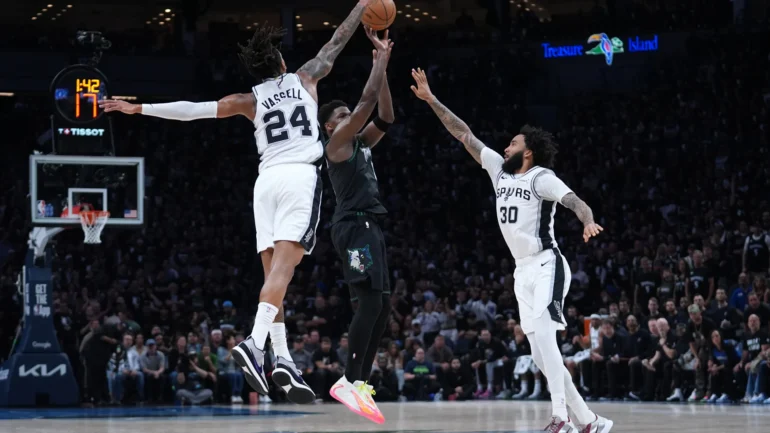
The core of the Spurs’ offensive success lies in their ability to generate advantageous situations before the defense can even set. As seen in early-game sequences, the Spurs seamlessly transition from defense to offense, forcing hurried defensive assignments. When guards like De’Aaron Fox initiate the break, the defensive focus shifts to containing the drive. However, this often leaves them vulnerable to kick-out passes. “Look at how much separation you have because nobody’s communicating defensively. Wide open three, big time shot early in the game,” highlights the recurring theme of defensive lapses. The Spurs capitalize on this, whether it’s through inverted screens that force bigs like Rudy Gobert into difficult switches or dribble handoffs (DHOs) that create immediate scoring opportunities.
Stefon Castle, in particular, has been the maestro orchestrating this offensive symphony. His ability to read defenses and exploit their tendencies is remarkable. The transcript details how Castle analyzes defensive coverages on screens: “Are you going to fight over? If you do, we’re going to create this two-on-one matchup… However, if you go under and or switch, we’re going to stop on a dime and shoot this ball.” This calculated approach, combined with his execution, makes him a primary threat. His performance against the Timberwolves, who were described as “done” and unable “to stop this Spurs offense,” exemplifies this. The Timberwolves’ defensive struggles were exacerbated by poor communication and “point switching” that left players like Castle wide open for critical three-pointers.
The defensive issues highlighted are not isolated incidents. The transcript points to a general lack of cohesion: “terrible communication. They’re trying to communicate, but you got two guys, three guys here down the paint guarding that Luke Cornet roll to the basket.” This breakdown allows players like Castle to find open teammates or create their own opportunities. While teams like the Oklahoma City Thunder possess more versatile defenders capable of switching, the Spurs’ depth and Castle’s playmaking ability continue to pose a significant problem. His “IQ when passing the ball, but also his playmaking ability after the pass” are crucial elements that unlock their offensive potential.

Beyond the pick-and-roll and DHO actions, the Spurs’ transition game is a masterclass in exploiting defensive positioning. “When you’re in transition defensively, you tend to back up way farther than you need to because you’re trying to prevent the drive to the basket,” the analysis explains. The Spurs cleverly “fill the lane correctly” and attack the space, forcing defenders to overcommit and opening up the three-point line. This strategy, combined with their passing prowess, leads to easy buckets and lobs, such as the “wide open lob for W.B.Y.”
In essence, the Spurs, spearheaded by Stefon Castle’s all-around game (noted for potentially 32 points, 8-11 rebounds, and 6 assists in one observation), have identified and are ruthlessly exploiting a fundamental weakness in NBA defenses: the inability to consistently communicate and execute effectively in transition and against varied screen actions. As the playoffs approach, teams will need to find answers to this evolving offensive paradigm, or they risk suffering the same fate as the Timberwolves.