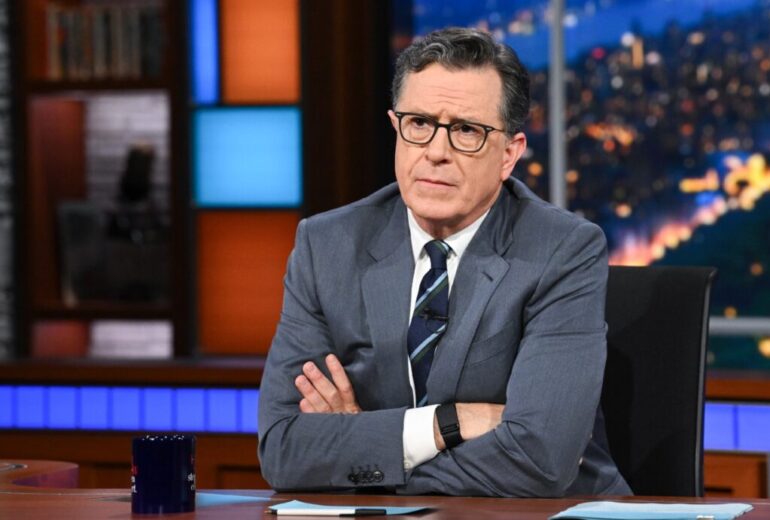

For years, Stephen Colbert occupied a unique space in the late-night landscape. As the original host of Comedy Central’s *The Colbert Report*, he embodied a persona of a blowhard conservative pundit, a satirical creation that allowed him to dissect and critique the media’s rightward drift and the political discourse it fostered without directly engaging in it. His mask was his method, a shield of irony that kept the real Stephen Colbert at a comfortable distance from the fray. Then came *The Late Show*, and with it, a profound shift. The mask came off, and the host, now unburdened by his satirical alter ego, began to lean into the very political commentary he once lampooned. This evolution, culminating in his recent assertion that the audience desires this political turn because “That’s the Part the Audience Wants to See,” signals a significant transformation not just for Colbert, but for the broader cultural appetite for late-night television and the role of humor in an increasingly polarized world.
The early days of *The Colbert Report* (2005-2014) established Colbert as a master satirist. His character, “Stephen Colbert,” was a caricature of conservative media figures, a proud purveyor of “truthiness” – a concept he defined as believing something intuitively, without regard for evidence, logic, or facts. This persona allowed him to engage with political issues through a distorted lens, highlighting the absurdity of certain viewpoints and the media’s complicity. He famously declared his candidacy for president in 2008 and hosted the “Colbert Super PAC” on his show, all within the framework of his satirical character. His positioning was clear: he was an observer, a commentator through a funhouse mirror, never claiming to be a neutral party but always operating under the guise of a specific, exaggerated role. This approach garnered critical acclaim and a dedicated following, solidifying his reputation as a sharp, intelligent humorist.
The transition to CBS’s *The Late Show* in 2015 marked a pivotal moment. Without the satirical mask of his Comedy Central days, Colbert adopted a persona closer to his real self. Initially, the show attempted to balance humor with a more traditional late-night format, featuring celebrity interviews and lighter segments. However, as the political climate in the United States intensified, particularly during the Trump administration, a noticeable shift began to occur. Colbert’s monologues became more pointed, his critiques sharper, and his personal opinions on political matters more overt. Moments of ambiguity gave way to outright political engagement. He moved from observing the absurdity of political discourse to actively participating in the critique of it. This mid-period evolution wasn’t a sudden leap but a gradual recalibration, responding to the escalating political tensions and, as he now suggests, the perceived desires of his audience.
The crystallization of this new narrative became undeniable in recent years. Colbert’s monologues frequently addressed political events with a blend of outrage, wit, and a clear liberal perspective. His show became a daily touchstone for many seeking commentary on the day’s political news, delivered with comedic flair. This shift, however, was not without its critics. While many viewers embraced the more overtly political stance, finding solidarity and catharsis in his commentary, others expressed disappointment, longing for the more detached satirical approach of *The Colbert Report*. Some critics and viewers felt he had abandoned the nuanced satire that made him unique, opting instead for a more partisan, albeit humorous, form of punditry. This led to debates about the role of late-night hosts, the line between commentary and activism, and whether the embrace of overt politics was a strategic choice or a genuine reflection of the host’s evolving views. Industry responses varied, with some applauding his willingness to tackle difficult issues head-on, while others questioned the long-term sustainability of such a politically charged approach in a medium that historically relied on broader appeal.
Colbert himself has acknowledged this transformation, offering insights into the motivations behind it. In a recent interview with *Variety*, he directly addressed the audience’s apparent appetite for his political commentary. “I think that’s the part the audience wants to see,” he stated, referencing the shift towards more political content. This admission is crucial. It frames his current approach not as an imposition of his own views, but as a response to viewer demand. It suggests a calculated understanding of the modern media ecosystem, where hosts who engage directly with the pressing issues of the day, particularly those that resonate with a significant portion of the audience, can cultivate a more dedicated and engaged viewership. While he doesn’t explicitly use terms like “attention-seeking” or “strategy,” his words imply a recognition that in the current climate, political engagement is a powerful tool for maintaining relevance and connection with his audience. It’s a performance, certainly, but one that feels increasingly intertwined with authentic conviction, blurring the lines between the host and the persona.

This pivot by Stephen Colbert reflects a broader cultural pattern concerning relevance, authenticity, and the dynamics of power and attention in the modern media landscape. The line between entertainment and news, between performance and genuine conviction, has become increasingly blurred. In an era saturated with information and opinion, audiences often seek out figures who can distill complex issues into digestible, emotionally resonant narratives. Colbert’s shift taps into this desire, offering a space where political frustrations can be acknowledged and processed through humor. It speaks to the challenge of maintaining cultural authority in a fragmented media environment. For Colbert, abandoning the satirical mask and embracing a more direct political stance seems to be a strategy for remaining at the forefront of cultural relevance. It’s a performance of authenticity, where the host’s perceived genuine engagement with political issues resonates more strongly than elaborate satire ever could. This approach, while potentially alienating some, solidifies his connection with a core audience that values directness and a perceived alignment of values. The question of whether this is about genuine belief or strategic performance is less important than its effectiveness in capturing and holding audience attention.
Ultimately, Stephen Colbert’s journey from satirical pundit to politically engaged host encapsulates a significant transformation in late-night television and its relationship with the cultural moment. His assertion that the audience wants to see the political side of his show suggests a keen awareness of contemporary viewer desires and a successful adaptation to the demands of the modern media ecosystem. He has found a way to maintain relevance by leaning into the political anxieties and passions of his audience, leveraging humor as a vehicle for commentary and connection. Whether this strategy of direct political engagement will continue to hold sway as the cultural landscape evolves remains to be seen. As the appetite for political discourse shifts and the definition of authenticity in public life is constantly re-examined, Colbert’s current positioning will undoubtedly face ongoing scrutiny. For now, however, he has tapped into a powerful current, demonstrating that in today’s fractured world, a perceived commitment to political truth, delivered with a comedic edge, is precisely what many viewers are looking for.