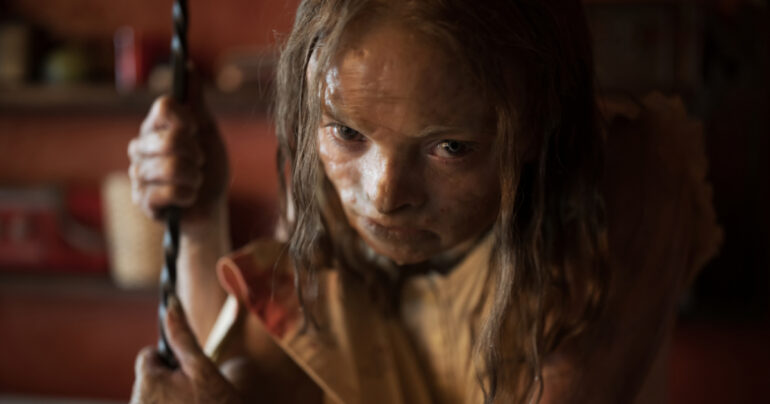
Lee Cornin’s now in theaters.
For decades, the cinematic identity of The Mummy was defined by a specific kind of swashbuckling charm—a cocktail of Brendan Fraser’s dimpled heroism and Stephen Sommers’ CGI-heavy spectacle. It was horror-lite, a Saturday afternoon serial that traded in ancient curses but dealt primarily in adventure. But the announcement of Lee Cronin taking the helm of the next iteration signals a sharp, almost violent pivot from that legacy. Cronin, the Irish filmmaker who turned a high-rise apartment into a blood-soaked abattoir in Evil Dead Rise, represents a shift from the “action-adventure” safety net toward a more primal, claustrophobic, and genuinely terrifying interpretation of the Universal Monster.
The tension here is palpable: can a franchise that became a symbol of early-2000s maximalism survive a return to its roots of shadow and dread? Cronin’s appointment isn’t just a change in personnel; it is a rejection of the failed “Dark Universe” attempt at Marvel-style world-building and a move toward the auteur-driven horror that has dominated the last decade of cinema.
From Folklore to the Industrial Abyss
Lee Cronin’s rise was not built on the back of blockbuster spectacle, but on the quiet, unsettling power of atmosphere. His 2019 debut, The Hole in the Ground, established him as a director obsessed with the corruption of the familiar. He took the Irish changeling myth and stripped away the whimsy, replacing it with a cold, damp sense of maternal anxiety. It was a film about the fear that the person you love most has been replaced by something ancient and hollow.
This early work positioned Cronin as a disciplined minimalist. However, his mid-period transition with Evil Dead Rise showcased a different gear. He took a beloved, often campy franchise and injected it with a level of mean-spirited intensity that surprised even hardcore fans. The film’s focus on domestic trauma—using a cheese grater and a glass-shard-filled hallway—showed a director who understands that horror is most effective when it feels intimate and tactile.
Now, we enter the most recent phase: the resurrection of The Mummy. Following the 2017 Tom Cruise-led disaster, which attempted to launch a sprawling cinematic universe, the franchise felt dead in the water. The public perception was that The Mummy was a brand that had lost its soul to corporate synergy. Cronin’s entry into this space crystallizes a new narrative: Universal is finally willing to let their monsters be scary again, abandoning the “action hero” template for something more visceral and grounded.
The Backlash of the Blockbuster
The shift in tone has not occurred in a vacuum. The industry response to the 2017 Mummy was one of widespread skepticism. It became the poster child for “franchise fatigue”, a film so focused on setting up sequels that it forgot to be a compelling movie. Audiences pushed back against the sanitization of the monster, and media framing since then has treated the Universal Monsters brand as a cautionary tale of hubris.
Peer reactions within the horror community, however, have been far more optimistic regarding Cronin. Directors like James Wan and Jason Blum have proved that mid-budget horror is where the real cultural impact lies. By handing the keys to Cronin, the studio is acknowledging that the “superhero-ification” of horror is a dead end. The conflict now lies between the nostalgic fans who want a return to the lightheartedness of 1999 and a new generation of viewers who have been reared on the “elevated horror” of A24 and the brutalist aesthetics of modern genre cinema.
The Strategy of the Scare
Cronin has been relatively candid about his motivations in taking on such a massive IP. In various interviews, he has implicitly acknowledged that his interest lies not in the “adventure” but in the “provocation.” Speaking to The Hollywood Reporter, Cronin has hinted that his take on the mythos will focus on the “purity of the threat.”
There is a calculated strategy here. Cronin isn’t just looking to make a hit; he’s looking to establish a specific kind of control over the material. By choosing to work within the constraints of a major studio while maintaining his “shards of glass” sensibility, he is attempting to bridge the gap between niche credibility and global relevance. His statements suggest a filmmaker who knows that in the modern media ecosystem, “safety” is a risk, and “provocation” is the only way to cut through the noise.
Legacy vs. The Looming Void
Zooming out, the “Cronin-ification” of The Mummy reveals a deeper cultural anxiety about the nature of legacy. We are living in an era where cultural authority is constantly being contested. On one side, we have the “Legacy Sequel” or “Reboot,” which often functions as a comfort-food exercise in nostalgia. On the other, we have a growing demand for authenticity—a desire for stories that feel authored rather than manufactured by a committee.

The shift toward a more horrific Mummy reflects a broader trend where audiences are increasingly seeking “extreme” experiences to combat the numbness of digital saturation. In an age of endless scrolling and algorithmic curation, a film that can actually elicit a physical reaction of dread carries a different kind of power. It suggests that power and influence in the modern media ecosystem are no longer about being “liked” by everyone, but about being “felt” by a dedicated core.
Furthermore, this situation highlights how cultural authority is gained today. It is no longer enough to have a recognizable name; a project must have a distinct “vibe” or aesthetic signature. Cronin’s Mummy is a test case for whether a director’s individual vision can survive the weight of a multi-million dollar sarcophagus. It asks if we are still capable of making “monsters” that represent our actual fears—mortality, decay, and the return of the repressed—rather than just being obstacles for a hero to punch.
The New Mythology
Ultimately, Lee Cronin’s The Mummy sits at a crossroads. It represents a move away from the shallow, surface-level narrative of the “cinematic universe” and toward a more profound, perhaps darker, exploration of myth. Whether this strategy carries weight in a changing environment remains to be seen. The cultural landscape is littered with the remains of “reimaginings” that failed to find their footing.
However, there is something undeniably compelling about the prospect of a director who understands the mechanics of fear taking on one of cinema’s most enduring icons. If Cronin succeeds, he won’t just have made a successful horror movie; he will have successfully navigated the transition from “indie darling” to “cultural architect.” He will have proven that even in an industry obsessed with the bottom line, there is still room for the strange, the unsettling, and the truly ancient. The question is no longer whether The Mummy can be a hero, but whether we are ready to be truly afraid of him again.