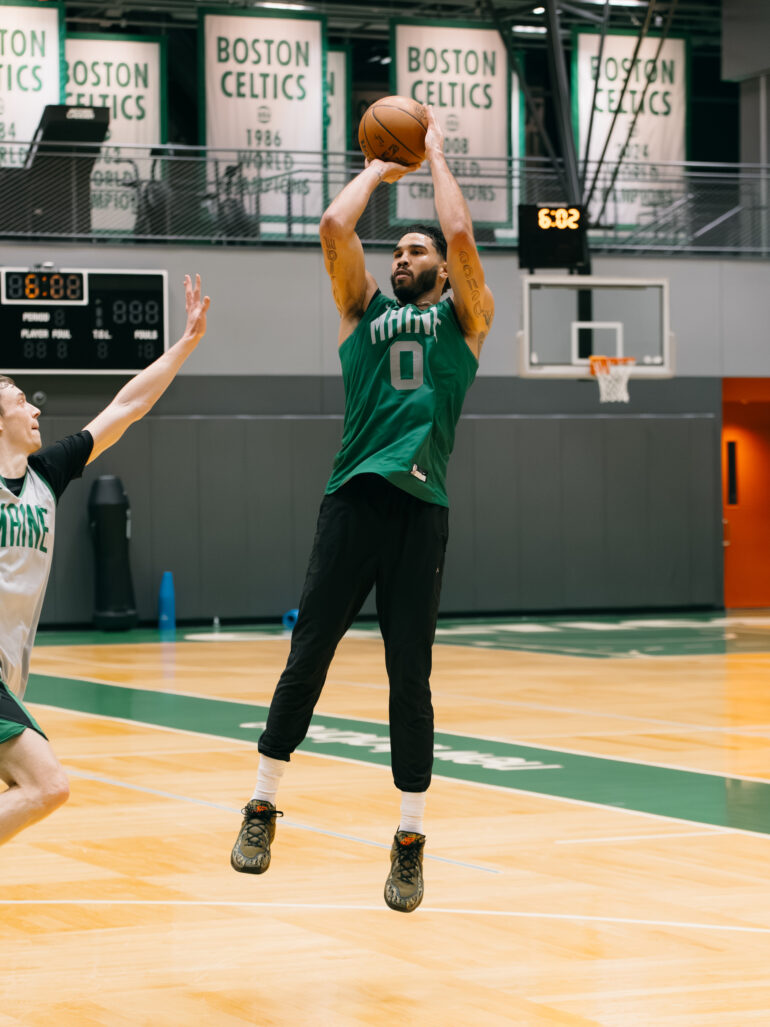

The roar of the crowd, the squeak of sneakers on hardwood, the familiar pressure of a playoff push – it’s the symphony that defines the NBA season. Yet, for Jason Tatum and the Boston Celtics, the return of their star forward from injury felt less like a triumphant homecoming and more like a calculated gamble. In a league increasingly driven by narratives, brand management, and the relentless pursuit of relevance, Tatum’s expedited comeback raises a critical question: When does the allure of immediate victory overshadow the long-term implications for a player’s body, legacy, and the very authenticity they project?
Tatum’s recent absence, though brief, was keenly felt. He missed three games due to a sprained ankle, a common ailment in the demanding NBA schedule. The initial diagnosis, reported on April 12, 2024, suggested he would be out for an indeterminate period, with many expecting a cautious approach given the Celtics’ already commanding lead in the Eastern Conference standings. However, in a swift turn of events, Tatum was back on the court just days later, playing on April 16, 2024, against the Washington Wizards. This rapid return, particularly for a player of Tatum’s caliber and importance to his team’s championship aspirations, stands in stark contrast to the typical prudence often advised for high-profile athletes nursing injuries, especially with the playoffs looming.
The Celtics, a team built for contention, have largely navigated the regular season with impressive authority. Entering the final stretch, they boasted the league’s best record, firmly in command of the top seed in the Eastern Conference. Their playoff standing was secure, affording them the luxury of resting key players and prioritizing health. Yet, the decision to bring Tatum back so quickly, without the benefit of a more extended recovery period, seemed to signal a different priority – an urgent need to recapture momentum, maintain rhythm, or perhaps, satisfy a more complex set of pressures than simply winning another game.
This dynamic echoes broader trends in professional sports, where the individual athlete is increasingly marketed as a brand, their every move scrutinized and leveraged. Consider the case of Kevin Durant. After a devastating Achilles tear in the 2019 NBA Finals, Durant returned to play in a Game 5 that many, including himself, felt was premature. Despite his immense talent, his subsequent years have seen a string of injuries and player movement that have perhaps complicated his legacy. While Durant has remained an elite player, the narrative of his career has been significantly shaped by the circumstances surrounding his return and subsequent team changes. The question for Tatum is whether this rapid reintegration, against the backdrop of a relatively stable and dominant team situation, is a strategic masterstroke or a sign of a culture that prioritizes immediate performance over sustainable longevity.
The conflict arising from such decisions is often subtle but pervasive. While fans crave immediate action and their stars on the court, medical professionals and long-term strategic thinkers often advocate for patience. The media, in turn, frames these returns as either heroic acts of dedication or reckless gambles, depending on the immediate outcome. For Tatum, the pressure is immense. As the face of the storied Celtics franchise, his every decision is amplified. The backlash, if any, is rarely overt, but it exists in the whispered conversations among fans, the analytical breakdowns by pundits, and the underlying anxiety that a seemingly minor tweak could escalate into a season-ending catastrophe. The industry itself often rewards the ‘tough’ player, the one who plays through pain, creating a cultural pressure cooker where vulnerability is often perceived as weakness.
Tatum himself has spoken about the mental toll of injuries and the desire to contribute. While direct admissions of rushing back due to external pressures are rare, the subtext is often clear. Athletes today are acutely aware of their marketability, their impact on team success, and their place in the historical narrative. The decision to play, even when not fully recovered, can be interpreted as a strategic move to maintain visibility, secure endorsements, and cement their status as indispensable. This is not to suggest malicious intent, but rather an acknowledgment of the complex ecosystem in which modern athletes operate, where performance is inseparable from promotion.


This situation reveals a fascinating paradox at the heart of contemporary sports culture. We celebrate athletes for their perceived authenticity and dedication, yet we also demand a level of curated performance that often borders on the artificial. The line between genuine passion and strategic branding has become increasingly blurred. In an era where social media dictates attention spans and championship windows feel perpetually narrow, the pressure to remain relevant and dominant is immense. This leads to a culture where ‘toughing it out’ can be lauded, even when it potentially jeopardizes long-term health or future performance. The quest for attention and influence means that even a player like Tatum, already a superstar, feels compelled to be present, to be seen, to be contributing, lest his absence create a vacuum filled by others, or worse, diminish his perceived indispensable status.
The modern athlete is tasked with an impossible balancing act: preserve their body for a career that is inherently finite, while simultaneously performing at peak levels to satisfy fans, teams, media, and their own brand aspirations. The NBA, with its grueling 82-game schedule and relentless playoff intensity, is a prime example of this pressure cooker. Tatum’s swift return, while potentially justified by the team’s medical staff and strategic imperatives, also serves as a potent symbol of this cultural moment. It questions whether the pursuit of legacy is being overshadowed by the pursuit of immediate relevance. In a landscape where narratives are constantly shifting and the next big thing is always around the corner, the challenge for athletes like Tatum is to ensure that their comeback stories are not cautionary tales of sacrificing long-term well-being for short-term gains, but rather testaments to a sustainable, impactful presence that transcends the ephemeral nature of the current moment.