For decades, the American superstar’s relationship with international baseball was defined by a polite, distant “maybe next time.” While the rest of the world treated the World Baseball Classic as a geopolitical battlefield, the American elite often viewed it as a high-risk spring training distraction. The “Dream Team” moniker was reserved for basketball; for baseball, the participation was more of a “B-List” obligation.
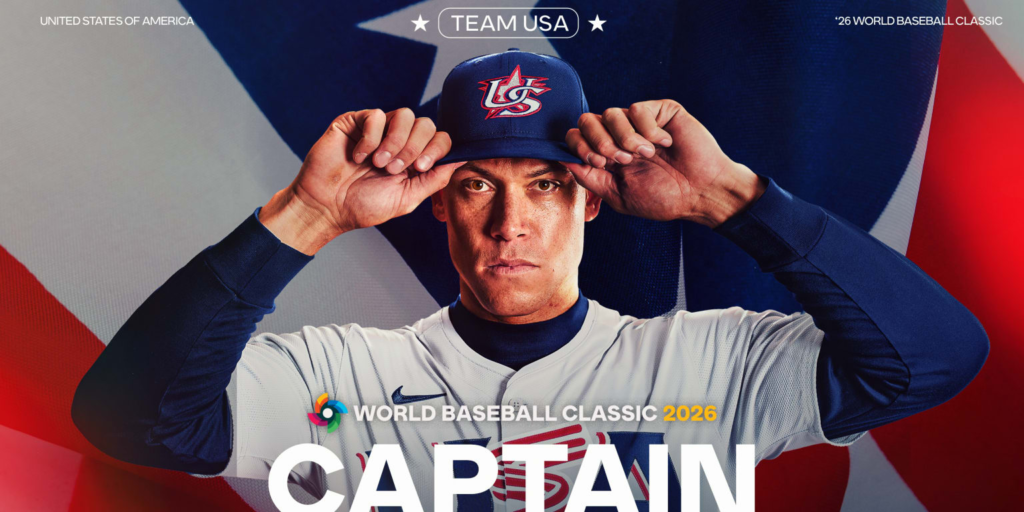
But as the 2026 WBC kicks off in Houston, that era of apathy hasn’t just ended—it has been incinerated. The shift from the 2023 heartbreak in Miami to the 2026 “All-In” mentality represents a fundamental transformation in how American athletes view their own legacy and the concept of “The National Pastime” in a globalized era. When Aaron Judge stands in a clubhouse flanked by Cy Young winners like Paul Skenes and veteran hammers like Kyle Schwarber, the subtext is clear: the era of the American “Participation Trophy” is over. This is about cultural reclamation.
From Exhibition to Obsession: A Timeline of Intent
The American journey to this moment was not a straight line. It was a slow-burn evolution from arrogance to insecurity, and finally, to a singular, focused intensity.
- The Early Stagnation (2006–2013): In the early iterations of the WBC, the U.S. roster was a revolving door of “thanks but no thanks.” High-profile stars cited the fear of injury or the need to focus on the MLB season. The tournament felt like an awkward guest in the baseball calendar.
- The 2017 Spark: Led by Marcus Stroman and Jim Leyland, Team USA finally won gold. It was the first time the American public saw a glimpse of what passionate international baseball looked like. However, it still lacked the “Avengers” level of star power seen in the NBA’s Olympic efforts.
- The 2023 Catalyst: This was the turning point. The image of Shohei Ohtani striking out Mike Trout to win the title for Japan didn’t just hurt; it embarrassed the American baseball establishment. The “best league in the world” had lost its crown on its own soil.
- The 2026 Realization: Fast forward to today. The recruitment didn’t start in February; it started in the clubhouse tunnels of the 2025 season. The commitments from players like Cal Raleigh and Griffin Jax weren’t reluctant; they were “automatic.”
The Conflict of Choice: Club vs. Country
The primary conflict of the WBC has always been the tension between the Major League Baseball franchise—the entity that pays the $300 million salary—and the national team. In years past, front offices would subtly (or overtly) discourage participation.
Today, that power dynamic has flipped. When Brad Keller signed his $22 million deal with the Philadelphia Phillies, his first concern wasn’t his spring training schedule; it was whether Dave Dombrowski would let him wear the Red, White, and Blue. The fact that the Phillies’ front office gave an immediate “green light” signals a shift in industry logic. The WBC is no longer seen as a threat to a player’s health, but as an essential component of their “presence” and “brand.”
Peer pressure has also become a potent weapon. When you have Michael Phelps showing up at a team dinner at the Global Ambassador Hotel to tell you that “second place is not going to get it done,” the weight of expectation changes. It’s no longer just a game; it’s a mission. The backlash for not playing has become louder than the risk of playing.
The Self-Admission: “We Want to Fix That”
The narrative of “it’s just an honor to be here” has been replaced by a more aggressive, self-aware admission of failure. Kyle Schwarber arguably summarized the team’s collective psyche when he noted, “We didn’t get the job done three years ago and we want to fix that.”
This isn’t corporate speak. It’s an admission of a bruise on the American ego. Even the younger players, like 21-year-old Roman Anthony, have skipped the traditional developmental path of a Boston Red Sox prospect to jump into this fire. Anthony’s admission that this was a “no-brainer” highlights a generational shift: young stars no longer view the WBC as a distraction from their career, but as the fastest way to cement their status as a “winning player.”
Cultural Analysis: The Death of Global Apathy
This transformation in Team USA reflects a broader cultural shift in how America engages with the world. For most of the 20th century, American sports culture was insular. We called our domestic champions “World Champions.” But in a 2026 media landscape dominated by TikTok clips and global streaming, that isolationism has collapsed.
We are witnessing the Internationalization of the American Ego.

- Relevance vs. Legacy: In a world where Japanese baseball and Latin American passion have redefined the sport’s energy, the American player has realized that winning a World Series in a vacuum isn’t enough. To be truly “Great,” you have to beat the world.
- Authenticity vs. Performance: The bonding rituals described by the players—the late-night dinners, the stories, the “diving into everybody”—suggest a move away from the hyper-individualized “mercenary” culture of MLB free agency. The USA jersey provides a rare moment of authentic collective identity in an era of personal branding.
- The Media Ecosystem: Platforms like ESPN and Fox Sports have stopped framing the WBC as a “spring training event” and started framing it as the World Cup of baseball. This media shift creates a feedback loop: if the media treats it like it matters, the fans treat it like it matters, and the players have no choice but to treat it like it matters.
Conclusion: The Stakes of Houston
As Team USA prepares to face Brazil in Houston, the air feels different. This isn’t a “shakedown cruise.” It’s a calculated, star-studded response to a world that dared to suggest American baseball had lost its edge.
Whether this roster—loaded with MVPs like Judge and Raleigh—actually brings home the gold remains to be seen. But the strategy has already won. By committing their best assets and embracing the pressure of “Gold or Bust,” Team USA has successfully reintegrated the National Pastime into the global conversation. They have moved from a position of “too cool to care” to “too proud to lose.”
In the modern cultural landscape, where attention is the only currency that matters, Team USA has finally realized that being the best in the world only counts if you actually show up to prove it. Predicting a win isn’t just hometown bias; it’s an acknowledgement of the sheer gravitational pull this roster creates. Anything less than a championship won’t just be a loss—it will be a cultural indictment.
The dream team is real. Now, they just have to survive the reality of the game.