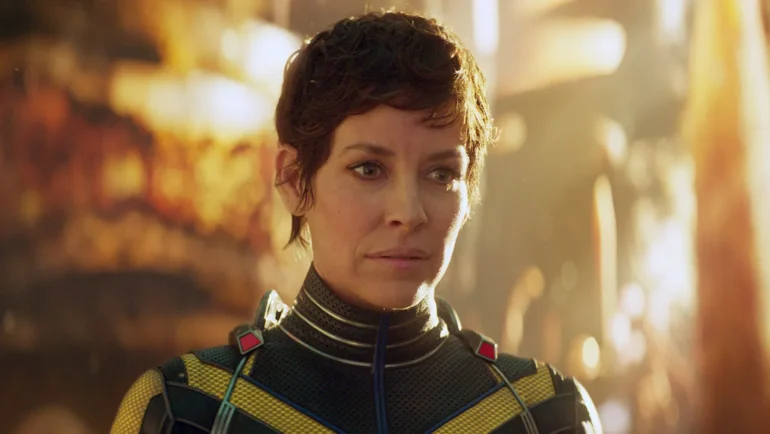

Evangeline Lilly, an actress who has long embodied the resilient, ass-kicking Hope van Dyne in Marvel’s Ant-Man franchise, recently found herself in a very different kind of fight. Her public condemnation of Disney’s widespread layoffs within Marvel Studios, labeling the actions “disgusting and horrible” and declaring “shame on you,” represents a jarring departure from the often-guarded or PR-sanitized commentary typically expected from those within the blockbuster machine. This moment, however, is more than just a celebrity’s outburst; it’s a potent symbol of the increasingly visible fractures within the entertainment industry and a reflection of the complex, often contradictory forces shaping contemporary cultural discourse around labor, performance, and the elusive pursuit of relevance.
Lilly’s career within the Marvel Cinematic Universe (MCU) has been characterized by her portrayal of a capable superhero, a character who often navigates complex emotional terrain while delivering physical prowess. Her early appearances, beginning with 2015’s *Ant-Man*, and culminating in a more prominent role in *Ant-Man and the Wasp* (2018) and *Avengers: Endgame* (2019), established her as a dependable, if not always central, figure in Marvel’s sprawling narrative. Her public persona, at least as it pertained to her MCU involvement, was largely one of professional engagement, often highlighting the collaborative nature of filmmaking and the dedication required to bring these fantastical worlds to life. She has, in the past, spoken about the demanding nature of the work, but usually within the context of the physical and mental challenges of acting, rather than critiquing the corporate structures underpinning it.
The timeline leading to Lilly’s recent vocal stance reveals a subtle but significant evolution. While she has occasionally engaged in discussions about the pressures of Hollywood and the industry’s impact on actors, her criticisms were often framed indirectly or focused on broader themes of mental health and artistic integrity, rather than direct corporate accountability. For instance, she has previously spoken about the need for balance and the challenges of maintaining a personal life amidst the demands of blockbuster filmmaking. However, these comments have historically been less about the specific operational decisions of the studios and more about the general occupational hazards of the profession. The shift occurred with the increasing frequency of large-scale industry layoffs, particularly following Disney’s significant restructuring and workforce reductions across various divisions, including its highly profitable Marvel Entertainment and Marvel Studios. These events, which began to intensify in late 2022 and early 2023, created an undercurrent of anxiety and uncertainty that permeated the industry, moving from abstract industry trends to palpable personal impacts for thousands of workers.
Lilly’s eruption into direct, public condemnation marks a sharp pivot. Her comments, widely circulated on social media and reported by outlets like Variety and People, directly targeted Disney’s executive decisions. “I am so disheartened and disgusted by the layoffs at Marvel,” she stated, articulating a sentiment that resonated with many who felt the corporation’s actions were callous. The phrase “shame on you” is not typically the language of measured industry discourse; it’s a direct, moral accusation. This public denouncement places her squarely in opposition to the corporate messaging, signaling a willingness to leverage her platform not just for promotional purposes, but for direct critique. The reaction from the public and industry observers was mixed but largely supportive of her sentiment, with many commending her for speaking out against perceived corporate greed and the human cost of such decisions. However, it also invited scrutiny, with some questioning the timing and the potential implications for her future within the franchise, a common tension when talent engages in public criticism of their employers.
In the wake of these pronouncements, Lilly herself has offered further, albeit often indirectly, acknowledgments of her motivations. While she hasn’t detailed a specific corporate strategy, her strong emotional language suggests a reaction driven by empathy and a perceived moral imperative. Her statements, emphasizing the “horrible” nature of the layoffs, imply a deeper concern for the individuals affected, moving beyond the contractual obligations of an employee to a more humanistic stance. She has implicitly acknowledged the power dynamics at play, positioning herself as an advocate for those who have lost their livelihoods. This act of speaking out, particularly in an industry where loyalty and discretion are often highly valued, can be interpreted as a strategic move to align herself with a more progressive or human-centric narrative, or simply as a genuine expression of moral outrage. The impact of such admissions, whether perceived as authentic or strategic, amplifies the discourse around corporate responsibility and the ethical dimensions of entertainment production.
Lilly’s intervention, while specific to Marvel, taps into a larger cultural narrative about the precariousness of modern employment, particularly within creative industries. The sheen of Hollywood glamour often obscures the reality of widespread job insecurity, even for those working on massive, ostensibly successful projects. The discourse surrounding these layoffs highlights a crucial tension between the pursuit of legacy and the immediate need for relevance. For legacy studios like Disney, maintaining dominance in a rapidly evolving media landscape often necessitates aggressive cost-cutting measures and strategic realignments, even if they disrupt long-standing practices or alienate talent and audiences. For individuals within the industry, the focus shifts from building a lasting career to navigating the immediate present, where job security can be fleeting. Lilly’s call for accountability challenges the notion that financial imperatives can or should always supersede humanistic considerations, questioning the authenticity of corporate pronouncements about valuing talent when layoffs occur.

Furthermore, the incident underscores the complex interplay of power, attention, and influence in the contemporary media ecosystem. Lilly, as a recognized figure within a globally dominant franchise, possesses a platform that few others do. Her ability to command attention with a single statement is a testament to the enduring power of celebrity, but also to the evolving nature of how that power is wielded. In an era where social media amplifies every utterance and audiences are increasingly attuned to the ethical implications of their entertainment choices, public figures are under greater scrutiny. The challenge for Lilly, and indeed for many in similar positions, is how to maintain credibility and influence. Is her current stance a fleeting moment of protest, or does it represent a fundamental shift in her engagement with the industry? In a landscape where authenticity is prized, but performance is often the currency, her actions invite a critical examination of where her true allegiances lie.
Ultimately, Evangeline Lilly’s vocal critique of Disney’s Marvel layoffs places her at a crossroads, both personally and culturally. Her willingness to publicly challenge her employer, using strong moral language, signals a desire to transcend the typical confines of celebrity advocacy. However, the lasting impact of such a stance in an industry driven by complex financial incentives and ever-shifting power dynamics remains to be seen. Does her position hold weight in a culture that is increasingly cynical about corporate practices but also prone to fleeting outrage? As the entertainment industry continues its relentless evolution, grappling with economic pressures and audience expectations, figures like Lilly will undoubtedly continue to test the boundaries of acceptable discourse. Whether her impassioned plea for accountability resonates beyond a moment of controversy will depend on the industry’s capacity for genuine change, and on whether her own narrative can maintain its conviction in the face of the very systems she has so sharply criticized.