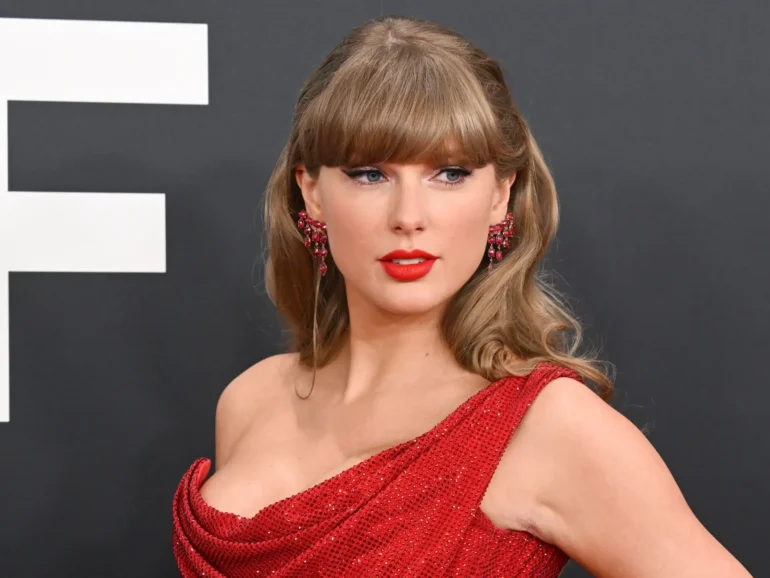
Taylor Swift once meticulously curated an image of earnest authenticity, a songwriter whose diary entries became chart-topping anthems. Her early work, steeped in the narrative of the wronged lover and the starry-eyed romantic, resonated deeply with a generation eager for relatable storytelling. Hits like “You Belong With Me” and “Teardrops on My Guitar” cemented her as the pop-country princess, a persona seemingly unassailable in its sincerity. This was an artist who wore her heart on her sleeve, and the world embraced her for it.
However, the Swift of 2026 is a different entity, one who has strategically navigated the treacherous waters of fame, reinvention, and legacy-building. The transition from the vulnerable singer-songwriter to the calculating business mogul and genre-bending chameleon has been a masterclass in public relations and artistic evolution. While her core songwriting prowess remains, the framing has shifted dramatically. Gone are the overt references to high school heartbreaks, replaced by stadium-filling spectacles and sonic explorations that push the boundaries of her established sound. The release of her latest album, a surprise drop that eschewed traditional promotional cycles, signals a confidence bordering on supreme self-assurance, a far cry from the artist who once seemed to tremble under the weight of public scrutiny.
The evidence of this transformation is scattered across her discography and public appearances. Her 2020 “quarantine albums,” *Folklore* and *Evermore*, marked a significant departure, embracing indie-folk sensibilities and a more mature, introspective lyrical style. Critics lauded this pivot, seeing it as a sign of artistic growth beyond her pop roots. Yet, even within these acclaimed projects, there were whispers of strategic curation, an almost too-perfect distillation of a particular aesthetic. As The New York Times noted in 2020, “Swift has always been a keen observer of her own myth-making, and these albums feel like a deliberate, sophisticated recalibration.” The subsequent re-recording of her early albums, while framed as reclaiming her master recordings, also serves to contextualize and, some might argue, subtly revise her narrative, offering a more polished, present-day perspective on past emotions.
This calculated evolution raises questions about authenticity versus performance. Is Swift’s current dominance a testament to her enduring artistic merit, or a triumph of strategic branding? Her ability to command global attention with each release, often dictating the terms of engagement, suggests a profound understanding of her cultural relevance. She has moved beyond mere popularity to become an institution, a cultural touchstone whose every move is scrutinized and analyzed. The massive success of her “Eras Tour,” a sprawling retrospective of her career, blurred the lines between concert and historical exhibit. It was a celebration of her past, yes, but also a powerful statement of her present and future dominance. As Variety reported on the tour’s unprecedented financial success, it was clear that Swift was not just performing songs; she was orchestrating an experience that transcended music into a cultural phenomenon.

Furthermore, Swift’s careful navigation of political and social issues demonstrates a keen awareness of her legacy. While she has become more vocal in recent years, endorsing candidates and speaking out on LGBTQ+ rights, these stances often feel measured, designed to solidify her appeal to a broader, more progressive audience without alienating her foundational fanbase. This contrasts sharply with the often more impulsive and less strategically aligned pronouncements of other artists. Her 2019 endorsement of Democratic candidates, detailed by Wikipedia, was a significant moment, signaling a shift in her public persona from apolitical pop star to a figure willing to engage with the cultural zeitgeist on a larger scale.
The question remains: does this sophisticated performance of self still hold the same weight as the raw, unvarnished emotion that once defined her? The data suggests yes. Her ability to adapt and evolve, to consistently deliver high-quality, culturally resonant work, while simultaneously mastering the art of public perception, has cemented her status. The vulnerability that once defined her is now channeled through a lens of profound self-awareness and control. She has not abandoned her past; she has curated it, presenting it as a testament to her enduring power and artistic vision. Her current strategy, while undeniably more calculated, continues to capture the zeitgeist, proving that in the ever-shifting landscape of popular culture, reinvention, when executed with such precision, can indeed be the ultimate form of authenticity.