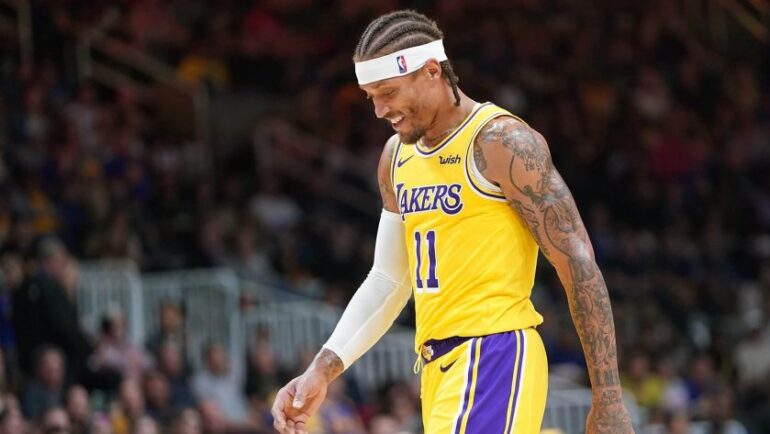
Michael Beasley’s recent appearance on ‘Club Shay Shay’ has ignited a crucial conversation surrounding the often-murky world of AAU basketball handlers and the financial exploitation of young athletes. Beasley recounted a stark personal experience, revealing how handlers and seemingly benevolent figures profited immensely from his burgeoning talent while he and his family struggled, a narrative that highlights a systemic issue within youth sports.
Beasley detailed how, at the NBA draft camp alongside contemporaries like Derrick Rose, Eric Gordon, and O.J. Mayo, he first learned of the widespread illicit payments happening behind the scenes. “They all looked at me and was like, yo, Bs, I know you was getting paid at all. No, I wasn’t,” Beasley recalled, expressing disbelief as his peers detailed sums ranging from thousands to hundreds of thousands of dollars received from handlers. This revelation was particularly jarring because Beasley himself had received only paltry sums, seemingly as loans, from the same individuals who were evidently making substantial fortunes off his potential.
The sting of this discovery was compounded by the subsequent revelation that the person who had supposedly been supporting him had meticulously documented every minor expense, from McDonald’s receipts to plane tickets, from Beasley’s early teenage years up to his NBA draft. This documentation was presented as a ledger of debt, implying Beasley owed a significant sum for these “advances.” “So he’s profited while you and your family struggling. And then I still owe you when I get there?” Beasley questioned, expressing the profound sense of betrayal. He eventually paid back what he termed his “childhood off,” a sum totaling over $185,000, a debt accrued from perceived acts of kindness that were, in reality, investments for the handler’s profit.
This experience underscores a critical critique of the AAU ecosystem and the role of handlers. Beasley argued that the issue isn’t necessarily the money itself, but