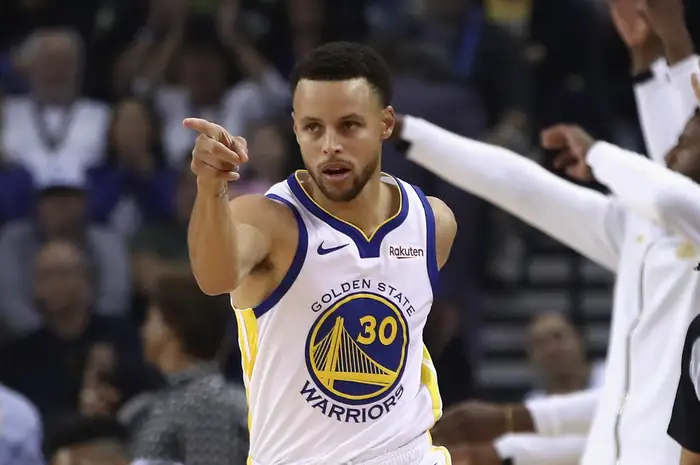
Curry’s Underpaid Claim NBA Revenue Versus Player Salaries Examined
Stephen Curry, arguably the most impactful player of his generation, recently ignited a familiar debate within the National Basketball Association: are players, even the highest earners, truly underpaid? His comments, rooted in the Collective Bargaining Agreement’s (CBA) limitations on player equity participation, suggest a deeper financial imbalance than the eye-popping salaries might indicate. While the average NBA salary is a staggering figure, a closer look at league revenue streams and the structure of player compensation reveals a complex picture that Curry believes shortchanges the talent driving the league’s immense success.
The Core of Curry’s Argument Equity and Partnership
Curry’s primary contention lies in the inability of players to “participate in equity” while actively playing. He articulated this point with clarity: “I think because the way the CBA is structured right now, we can’t participate in equity. And that’s a big deal because it’s a partnership with ownership, the league and we’re on the short term of that revenue.”
This statement cuts to the heart of a long-standing tension in professional sports – the divide between the labor and ownership. Players, the primary engine of the NBA’s entertainment value and revenue generation, do not share in the long-term appreciation of the franchises they represent. Unlike venture capitalists or founders who benefit from the growth of a company, NBA players’ financial gains are largely tied to their playing careers, a finite period.
He further elaborated on this sentiment: “The idea that we can’t participate in equity while we’re playing is a part of why I would say yes, we are underpaid because you want to be able to participate in that rise.”
This suggests that the perceived value of an NBA franchise, which has seen exponential growth, is not adequately reflected in player compensation structures beyond immediate salary and performance bonuses. The appreciation of team valuations, often driven by media deals, global marketing, and star player appeal, accrues primarily to the owners.
The NBA’s Financial Landscape Revenue Streams and Player Share
The NBA is a financial juggernaut. In the 2023-2024 season, league revenues are projected to exceed $11 billion, a figure that has steadily climbed over the past decade. This robust growth is fueled by several key revenue streams:
- Media Rights: This is by far the largest contributor. National broadcast deals with networks like ESPN and TNT, as well as international broadcasting agreements, generate billions annually. The upcoming media rights deal, expected to be even more lucrative, will further inflate league revenues.
- Sponsorships and Merchandise: Global brands align with the NBA and its stars, while the sale of team merchandise, from jerseys to collectibles, also adds significant income.
- Ticket Sales and Gate Receipts: While a substantial part of team-specific revenue, the overall attendance and demand for NBA games contribute to the league’s economic vitality.
- Digital and International Expansion: The NBA has aggressively expanded its digital presence through NBA League Pass and its global footprint through international games and marketing efforts.
Historically, player salaries have been tied to a percentage of Basketball Related Income (BRI) through the CBA. The current agreement, ratified in 2023, sets the player’s share of BRI at approximately 50%. This means that as league revenues grow, so too does the pool of money available for player salaries. However, the lack of equity participation remains a critical point of contention.
Decoding the Numbers Player Salaries vs. League Wealth
To illustrate Curry’s point, consider the disparity in wealth. While the average NBA player salary in the 2023-2024 season hovers around $10-12 million, this figure is heavily skewed by a handful of maximum contracts. Many players earn significantly less. For instance, the minimum salary for a player with zero years of service is around $1.1 million.
Compare these figures to team valuations. According to Forbes, the average NBA team valuation in 2023 was over $3.5 billion, with the New York Knicks leading the pack at an estimated $6.1 billion. Many of these franchises have seen their values more than double in the last five to ten years, a rise that Curry believes players are instrumental in driving but do not benefit from directly through ownership stakes. The NBA’s own Commissioner, Adam Silver, has acknowledged the league’s financial success, projecting continued growth, particularly with the new media deal on the horizon.
Curry’s Perspective Acknowledging Privilege While Striving for More
It’s important to note that Curry is keenly aware of the privileged position NBA players occupy. He stated, “I know we’re blessed to be in a position where we’re playing basketball for a living, and these are the type of checks that people are earning.”
This acknowledgement tempers any perception of entitlement and grounds his argument in a desire for a fairer partnership, not a complaint about current earnings. He is not arguing that players are struggling financially but rather that the structure of the economic relationship leaves a significant portion of the value they create on the table.
The Future of Player Compensation
The debate over player compensation and equity participation is intrinsically linked to the ongoing negotiations and evolution of the CBA. Curry’s comments serve as a powerful statement from one of the league’s most respected figures, highlighting a systemic issue. “Hopefully sooner than later those rules change a little bit so that players can participate more in the upside of team equity. I think we deserve it.”
His vision is one where players are not just employees but true partners, sharing in the long-term success and growth of the teams and the league they have helped build into a global phenomenon.
Until the CBA evolves to include equity participation, or alternative compensation models are explored, Curry’s assertion that NBA players are, in a fundamental sense, underpaid, will likely continue to resonate. The argument isn’t about the absolute value of their salaries, but about the equitable distribution of the immense wealth they help generate.