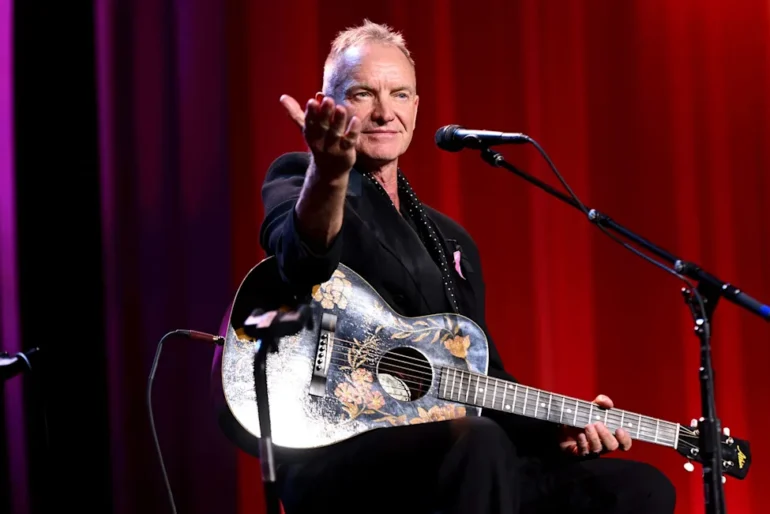
In a move that contrasts sharply with the often-perceived entitlement within celebrity offspring circles, music icon Sting has declared his intention not to fund his children’s careers through his considerable inheritance. The legendary musician, known for his pioneering work with The Police and a successful solo career, emphasized the paramount importance of instilling a robust work ethic, stating his belief that his children should earn their successes rather than inherit them.
This stance offers a refreshing counterpoint to narratives that frequently depict wealthy artists providing substantial financial backing for their progeny’s artistic endeavors, regardless of merit. Sting’s perspective, shared recently, underscores a philosophy rooted in personal achievement and the value of genuine struggle in the creative process.
The timeline of Sting’s career, from his early days with The Police in the late 1970s through his extensive solo work and forays into acting and humanitarian efforts, has been marked by consistent dedication and evolution. His multifaceted success, detailed by sources like Wikipedia, stems from a relentless pursuit of artistic expression and business acumen.
In articulating his position, Sting cited the importance of understanding the value of work. “We have to feed ourselves,” he reportedly stated, advocating for a hands-on approach to career development. This sentiment directly challenges the notion that inherited wealth should pave the way for artistic ventures. It positions talent and effort as the true currency of success, a principle that resonates with the publication’s commitment to cultural criticism that is both incisive and measured.

The cultural analysis here hinges on the interplay between legacy and relevance, authenticity and performance. For an artist of Sting’s stature, whose legacy is firmly established, the decision about how to pass on wealth and influence offers a lens through which to examine contemporary celebrity culture. By choosing to withhold financial support for his children’s careers, Sting appears to be prioritizing the preservation of their autonomy and the integrity of their potential achievements. This approach asks whether his current strategy still carries weight in an era where nepo-baby discussions dominate entertainment discourse, suggesting that perhaps the most valuable inheritance is not monetary, but a profound understanding of labor.
Further insights into the music industry’s dynamics and artist trajectories can be found in publications such as Variety and Billboard, which regularly cover the business and cultural impact of artists and their families.