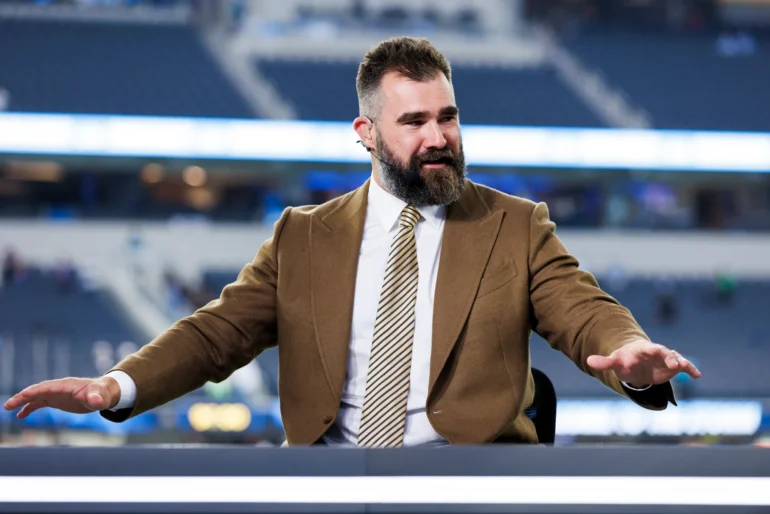
The NFL landscape is abuzz with speculation as Jason Kelce, the recently retired Philadelphia Eagles legend, is reportedly in discussions with ESPN regarding a potential role in their broadcast booth. This development marks a significant potential shift for the former center, whose on-field persona was defined by its raw authenticity and unyielding intensity. The transition from a physically demanding playing career to the analytical and performative world of sports broadcasting presents a fascinating case study in legacy, authenticity, and the evolving nature of sports media.
Kelce’s career was a masterclass in grit and dedication. For 13 seasons, he was the heart and soul of the Eagles’ offensive line, earning numerous accolades including a Super Bowl LII victory and seven First-Team All-Pro selections. His retirement after the 2023 season, a decision many found surprising given his continued high level of play, immediately fueled speculation about his next chapter. Unlike many athletes who transition into quieter retirement or limited media appearances, Kelce has consistently demonstrated a thoughtful and articulate engagement with the game and its broader cultural implications.
The prospect of Kelce joining ESPN’s NFL coverage, as first reported by Andrew Marchand of The Athletic, aligns with the network’s ongoing efforts to refresh its broadcast talent. ESPN, a titan in sports media, often seeks personalities who can offer both deep football knowledge and compelling storytelling. Kelce, with his genuine charisma and articulate nature, demonstrated in various interviews and his popular podcast “New Heights” with his brother Travis Kelce, appears to be a natural fit. His ability to connect with fans, often through humor and insightful commentary, suggests a potential to transcend the typical analyst role.
However, the transition is not without its complexities. The broadcast booth demands a different kind of performance than the gridiron. While Kelce’s authenticity is a significant asset, the challenge lies in translating that raw, in-the-moment passion into a measured, analytical, and engaging broadcast. As noted by sports media observers, the line between genuine insight and performative punditry can be thin. Kelce’s past reputation is built on the visceral experience of playing the game at an elite level, a stark contrast to the often detached and critical perspective required in broadcasting. The question remains whether his genuine voice can adapt to the structured environment of a television broadcast without losing its essential character.
The cultural relevance of an athlete like Kelce entering the media sphere is undeniable. In an era where the lines between athlete, influencer, and commentator blur, Kelce’s potential move highlights the growing importance of athletes who can articulate their experiences and perspectives beyond the game itself. His podcast, “New Heights,” co-hosted with his brother, has become a cultural phenomenon, blending NFL insights with personal anecdotes and a candid humor that resonates with a broad audience. This success indicates a capacity for communication that extends far beyond the locker room.
ESPN’s pursuit of Kelce also speaks to a broader trend in sports media: the value placed on established, respected figures who can offer a blend of nostalgia and forward-looking analysis. The network will be looking to leverage Kelce’s deep understanding of offensive line play, his experience in high-pressure situations, and his reputation as a player’s advocate. Yet, the critical lens of cultural analysis must be applied. Is this a genuine expansion of his influence, or a performance designed to maintain relevance in the public eye? The distinction is crucial for his long-term legacy.

The success of Kelce’s potential broadcast career will hinge on his ability to navigate this transition authentically. Can he maintain the incisive, confident, and measured tone that defines effective cultural criticism, or will the demands of the booth lead to a more performative, less genuine presentation? His past identity as a warrior on the field, a symbol of unwavering commitment, now faces a new arena where words and analysis carry the weight previously held by physical dominance. The evidence from his podcast suggests he possesses the raw material, but the transformation into a leading NFL broadcaster is a significant undertaking.
Ultimately, whether Jason Kelce’s foray into the ESPN broadcast booth will carry the same weight as his legendary playing career remains to be seen. His current strategy of leveraging his authentic voice and deep football knowledge offers a promising path, but the ultimate measure will be in his ability to connect, inform, and resonate with an audience accustomed to a different kind of performance. His emergence in these discussions signals a new chapter, one that could redefine the role of the athlete-turned-commentator.