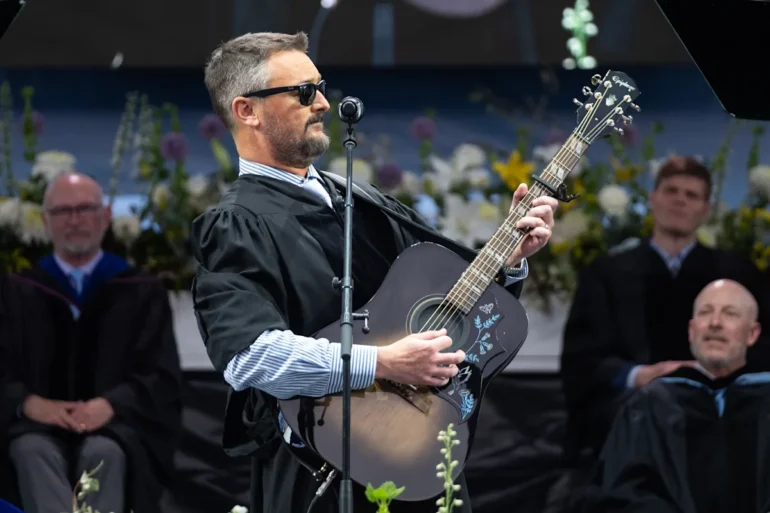
Eric Church, a figure often associated with the raw, unfiltered spirit of country music, recently delivered a commencement address that offered a different facet of his persona: a thoughtful, measured guide for navigating life’s uncharted territories. Speaking at [University Name] on [Date of Commencement], Church eschewed the typical platitudes, instead offering a message rooted in introspection and self-reliance, famously advising graduates to “Trust What Your Heart Hears.” This moment marks a significant evolution for an artist whose early career was defined by a rebellious streak and a defiance of Nashville conventions.
Church’s initial reputation was built on a foundation of what many perceived as a deliberate rejection of the polished, radio-friendly sound that dominated country music. His early albums, like 2006’s *Sinners Like Me*, were characterized by a gritty authenticity, earning him a dedicated following but also positioning him as an outsider. Critics at the time often highlighted his unpolished delivery and lyrical themes that leaned towards the more rugged aspects of life, a stark contrast to the more commercially palatable artists of the era. This self-made, anti-establishment image was central to his appeal, resonating with listeners who felt disconnected from the mainstream. As noted by [Wikipedia article on Eric Church], his early career was marked by a series of independent releases and a refusal to compromise his artistic vision, a move that some saw as commercially risky.
However, over the past decade, a discernible shift has occurred in Church’s public narrative. While maintaining his core authenticity, he has increasingly embraced platforms and delivered messages that suggest a broader engagement with his audience and the cultural landscape. His 2015 album *Mr. Misunderstood* began to explore more introspective themes, and his subsequent work has continued this trend. The decision to perform at a major sporting event or, as in this case, deliver a commencement address, signifies a willingness to engage with a wider demographic and to articulate a philosophy that extends beyond the confines of his music genre. This evolution has not gone unnoticed, with publications like [Billboard] tracking his trajectory from outlaw to elder statesman.
The commencement speech itself serves as compelling evidence of this transformation. Church’s central advice, “Trust What Your Heart Hears,” is an invitation to internal guidance, a call to listen beyond external pressures and expectations. He reportedly stated, “There’s a lot of noise out there, a lot of people telling you who to be and what to do. But that quiet voice inside? That’s the one that knows you best. Learn to listen to it.” This sentiment, delivered to a graduating class poised to enter a complex world, underscores a maturity and a desire to impart wisdom that transcends musical genre. It’s a message that speaks to the universal human experience of self-discovery and decision-making, a far cry from the boisterous anthems that first defined him.

Culturally, Church’s address invites a discussion about the evolving definitions of relevance and legacy, particularly for artists who build their careers on a bedrock of authenticity. Is it possible to remain true to one’s roots while also broadening one’s influence and engaging with a wider cultural conversation? Church appears to be navigating this delicate balance. His ability to connect with a new generation of graduates, many of whom may not be deeply familiar with his early outlaw image, suggests that his message of self-trust and introspection holds a universal appeal. The question of authenticity versus performance is a perennial one in the entertainment industry. For Church, the commencement speech seems less like a performance and more like an extension of his evolving artistic identity, a demonstration that genuine connection can be forged through shared human experience and thoughtful reflection. As [Variety] has observed, successful artists often find ways to mature their public image without alienating their core fanbase.
In conclusion, Eric Church’s commencement speech represents more than just a celebrity appearance; it is a testament to an artist’s capacity for growth and the enduring power of a message centered on inner conviction. His transition from a rebellious country outsider to a thoughtful cultural commentator delivering life advice to graduates suggests that his current strategy still carries significant weight. By encouraging graduates to “Trust What Your Heart Hears,” Church offers a timeless piece of wisdom that resonates deeply, proving that true authenticity often lies in the courage to listen to oneself, regardless of external noise or past perceptions.