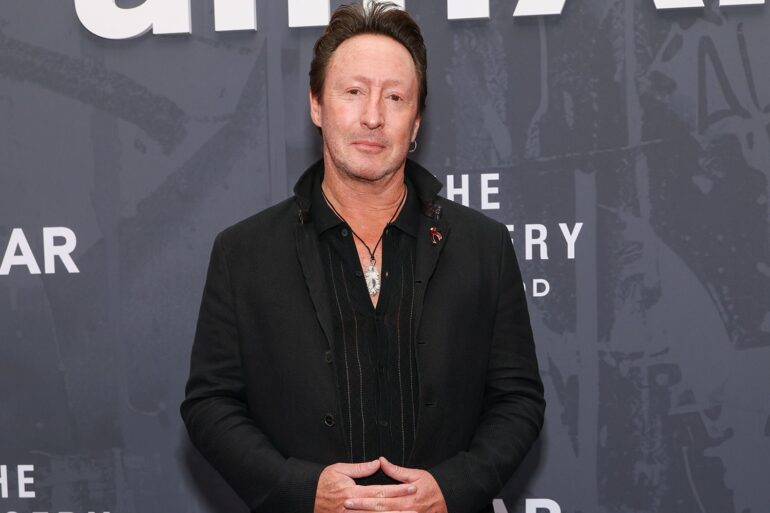
Julian Lennon, the eldest son of Beatles legend John Lennon, has recently disclosed his diagnosis with coronary heart disease, a revelation that prompts a closer examination of his public persona and evolving legacy. While often operating in the shadow of his iconic father and the Beatlemania that defined his childhood, Lennon’s recent health announcement offers a stark contrast to the more private, introspective artist who has largely eschewed the relentless glare of the spotlight. This diagnosis, however, brings him to the forefront, demanding attention not for artistic output, but for a deeply personal health struggle.
Born in 1963, Julian Lennon’s early years were marked by the extraordinary circumstances of his father’s global fame. His childhood, though privileged, was also characterized by the complexities of his parents’ turbulent relationship, which ultimately led to divorce when he was five. Unlike his younger half-brother Sean, Julian was not raised immersed in the experimental artistic circles of his father’s later life. Instead, his formative years were shaped by his mother, Cynthia Lennon, and a desire to forge his own identity, separate from the overwhelming legacy of John Lennon. He inherited his father’s musical inclinations, releasing his debut album “Valotte” in 1984, followed by “The Secret Value of Daydreaming” in 1986 and “Mr. Jordan” in 1989. These early works, while commercially successful to a degree, were often critically reviewed through the lens of his lineage, a comparison he has spoken about with weariness over the years.
In recent years, Lennon has spoken more openly about his past struggles, including the emotional toll of his father’s death and his own journey toward healing and self-discovery. His public appearances have been less frequent, often focusing on charitable endeavors or artistic projects that reflect a more mature perspective. The revelation of his coronary heart disease diagnosis, however, marks a significant shift, moving the narrative from artistic or personal reflection to a critical health confrontation. “I was diagnosed with coronary heart disease, which is now a big thing for me to deal with,” Lennon stated in a recent interview, underscoring the gravity of the situation. He further elaborated on the impact of the diagnosis, noting, “It’s a wake-up call, you know. I’ve been very unhealthy, and I’ve been living a life that’s not been that healthy.” This candid admission signals a profound reevaluation of his life choices and priorities.
The cultural analysis of Julian Lennon’s trajectory often grapples with the concept of relevance versus legacy. For decades, his primary cultural footprint was inextricably linked to his father. While his music garnered attention, it rarely transcended the shadow of John Lennon’s unparalleled influence. However, his recent openness about his health, and the proactive steps he is now taking, could redefine his public narrative. The authenticity of his current stance—facing a serious health issue with frankness—stands in contrast to the often-performative aspects of celebrity life. His willingness to share this deeply personal challenge, without the typical fanfare, suggests a desire for genuine connection and perhaps a new form of influence, one rooted in vulnerability and the shared human experience of confronting mortality and illness. As noted by Billboard, Lennon has previously expressed a desire to move beyond his famous surname, and this health crisis may offer an unexpected avenue to achieve that, by focusing public attention on his personal resilience.

The evidence of this shift is not just in his words but in the implied commitment to change. His acknowledgment of an “unhealthy” lifestyle suggests a departure from past habits, a critical step in managing coronary heart disease. This is not merely a celebrity health scare but a moment of profound personal reckoning. The implications for his legacy are considerable. If he navigates this challenge with the same candor he has shown in revealing it, Julian Lennon might forge a new, more potent connection with his audience. His story could evolve from one of inherited fame and artistic struggle to one of personal triumph over adversity, a narrative that resonates deeply in contemporary culture. The question remains whether this newfound vulnerability and the gravity of his health battle will ultimately solidify his standing, not just as John Lennon’s son, but as an individual with a compelling story of his own. His recent advocacy for men’s health, prompted by his diagnosis, further cements this new chapter, as highlighted by reports from Variety. The path forward, though medically challenging, appears to be one of greater personal authenticity and public engagement, a significant transformation from the more elusive figure of his earlier career.