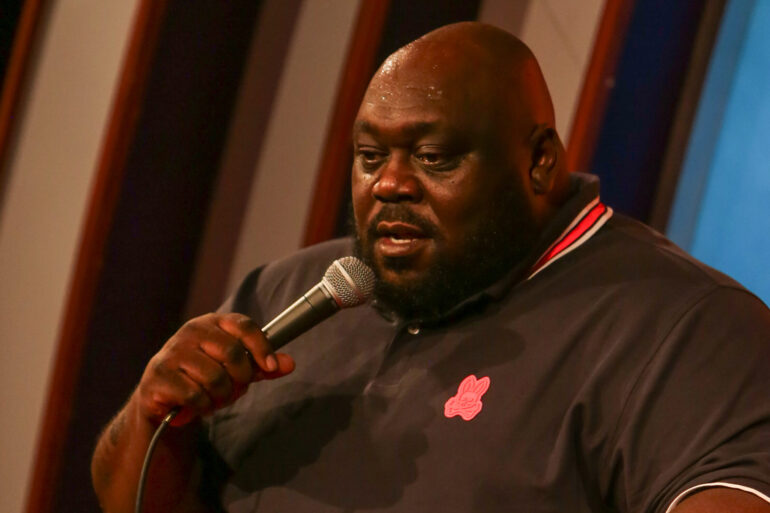
Faizon Love, a performer whose indelible characters have soundtracked countless holiday seasons and classic comedies, now finds himself in a decidedly less festive spotlight. His recent arrest in Florida for contempt of court, stemming from a paternity case, stands in stark contrast to the larger-than-life, often comedic personas that cemented his place in popular culture. This juxtaposition is not merely a personal low point; it serves as a potent, albeit unfortunate, lens through which to examine the evolving dynamics of public image, accountability, and the enduring quest for relevance in a hyper-connected world.
Love, 58, known for his unforgettable turns as the gruff store manager Wanda in the 2003 Christmas favorite Elf and the menacing Big Worm in the 1995 cult classic Friday, was taken into custody in Tampa on June 16th. The charges of contempt of court, according to Hillsborough County Sheriff’s Office records, were linked to a reopened paternity case initiated in 2019 with a woman named Tiffany Lee. While details remain sealed, public records indicate a struggle with court orders, including financial disclosures and a history of motions to suspend his driver’s license, culminating in an active civil warrant and an “affidavit of arrears” for back child support. This legal entanglement presents a stark departure from the uninhibited, often boundary-pushing comedic energy that defined his early career.
The initial public perception of Love was largely built on a foundation of fearless comedic performance. His roles in films like Couples Retreat and his early work in the 1990s established him as a distinct voice, capable of both broad humor and a certain streetwise authenticity. He was a fixture in a particular era of urban comedy, often playing characters who, while perhaps flawed, possessed a certain magnetic charisma. However, the narrative surrounding his recent legal issues shifts the focus dramatically from performance to personal responsibility. The media’s coverage, initially driven by celebrity news outlets and then picked up by broader news organizations, frames him not as a comedic icon, but as a figure embroiled in a protracted legal dispute, highlighting a vulnerability and a struggle for compliance that is far removed from his on-screen bravado.
While Love has not issued a direct statement regarding the motivations behind his alleged non-compliance, the documented court proceedings speak volumes. The repeated legal actions, including motions to suspend his driver’s license and the affidavit of arrears, suggest a pattern of resistance to fulfilling legal obligations. This isn’t about a missed line or a flubbed scene; it’s about navigating the serious consequences of failing to adhere to judicial mandates. The struggle to comply with court orders, particularly financial ones related to child support, can be interpreted as a desperate, perhaps misguided, attempt to maintain a semblance of control or autonomy in the face of inescapable responsibilities, or simply a failure to adapt to the demands of adulthood and parenthood outside the performance sphere.

This situation probes deeper questions about the contemporary cultural landscape. In an age where celebrity is often curated and meticulously managed, Love’s current predicament underscores the tension between public persona and private reality. It forces a confrontation with the idea of legacy versus relevance. While his past work ensures a certain enduring cultural footprint, his current actions raise questions about how an artist’s later-life conduct shapes their overall narrative. The digital age amplifies every misstep, making the performance of authenticity more crucial than ever. For figures like Love, whose career was built on a certain raw, unvarnished energy, the challenge becomes how to maintain that perceived authenticity while also demonstrating the accountability expected in personal and legal matters. The battle for attention and influence in today’s media ecosystem often rewards controversy, but the nature of that controversy matters. Legal entanglements, particularly those involving financial and parental responsibilities, carry a different weight than artistic disputes or public feuds.
Ultimately, Faizon Love’s recent arrest and the ongoing paternity case serve as a sobering reminder that the spotlight can be unforgiving, and that the characters we play on screen do not always shield us from the realities of life off-screen. As his legal battles continue, the question remains whether this current chapter will overshadow his comedic contributions or if, like many complex figures in the public eye, his narrative will evolve to encompass both the celebrated artist and the individual grappling with personal challenges. In a culture that constantly seeks new narratives, the endurance of older ones, especially those tied to legal and personal accountability, is being tested, forcing a reevaluation of how we perceive and remember those who have long entertained us.