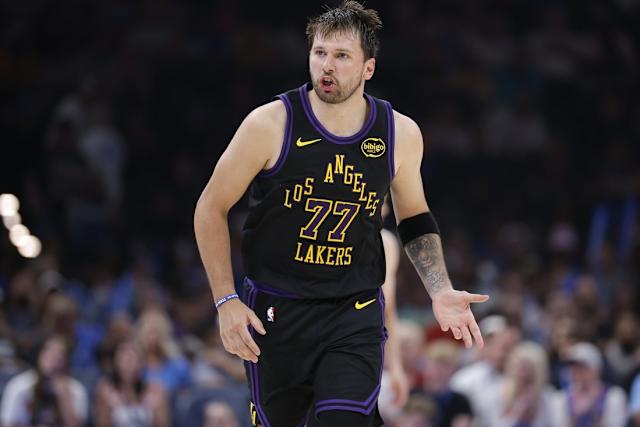

Luka Dončić, the Slovenian phenom whose dazzling skill set has redefined modern basketball, has long been presented as a prodigious talent operating with an almost preternatural calm. He arrived in the NBA with an aura of an old-soul player, a prodigy who seemed to transcend the usual anxieties of the hyper-competitive American sports landscape. Yet, his recent decision to travel to Madrid, Spain, for advanced regenerative therapy to treat a Grade 2 hamstring strain signals a significant evolution, a departure from the perceived stoicism and a bold embrace of cutting-edge, and in some ways, controversial, medical interventions. This move isn’t just about a star athlete seeking a faster recovery; it’s a potent symbol of a broader cultural shift where the pursuit of peak performance, especially for elite athletes facing immense professional pressure, often necessitates venturing beyond conventional limits and established regulatory frameworks.
The narrative surrounding Dončić’s injury and subsequent treatment journey offers a critical lens through which to examine the evolving landscape of sports medicine and athlete agency. The choice to seek treatment in Spain, particularly with a practitioner like Dr. Javier Barrio, known for his use of advanced cell-based therapies, immediately raises questions about the efficacy, safety, and regulatory disparities that define the global pursuit of athletic recovery and enhancement.
The Science of the Strain and the Spanish Solution
At the heart of Dončić’s decision lies a stark difference in regulatory approaches to regenerative medicine, particularly concerning stem cell therapies. In the United States, the Food and Drug Administration (FDA) maintains a stringent stance on most stem cell treatments. The agency generally permits therapies that involve ‘minimal manipulation’ of a patient’s own cells, meaning the cells are removed, processed in a way that doesn’t significantly alter their fundamental characteristics, and then re-inserted into the same patient. This typically involves autologous (from the patient) platelet-rich plasma (PRP) injections or other basic cell therapies where the cells are not expanded or cultured extensively. The FDA’s caution stems from concerns about the potential for unintended consequences, including the risk of tumor formation and the transmission of diseases, especially if cells are manipulated or cultured extensively.
In contrast, many European nations, including Spain, have a more permissive regulatory environment for certain regenerative treatments. Dr. Barrio’s approach, as reported, often involves ‘cell expansion’ and culturing techniques. This process takes a small sample of a patient’s cells (often mesenchymal stem cells from bone marrow or adipose tissue), then grows them in a laboratory setting for a significant period. The goal is to proliferate these cells into the hundreds of millions, creating a much larger and potentially more potent therapeutic dose. The biological rationale behind this is that a significantly larger number of specialized cells can provide a more robust regenerative signal, potentially accelerating tissue repair and healing. These cultured cells are then injected into the injured area, aiming to promote faster and more complete regeneration of damaged muscle tissue.
The distinction is crucial. While US-based treatments focus on a relatively small, minimally altered dose of the body’s own healing agents, the European model aims to amplify the body’s natural repair mechanisms exponentially through laboratory culturing. For an elite athlete like Dončić, whose career trajectory and earning potential are inextricably linked to his on-court performance, the allure of a potentially faster recovery timeline offered by this more aggressive, cell-expanded therapy is undeniable. A Grade 2 hamstring strain typically carries a recovery period of 4–6 weeks, a significant absence during the critical latter stages of an NBA season and the prelude to the playoffs. The prospect of shaving even a week or two off this timeline, or ensuring a more complete recovery to prevent re-injury, can justify the risks and the considerable logistical undertaking.
The Biological Advantage and the Risk Calculus
The biological advantage of having hundreds of millions of cultured cells, rather than a minimally manipulated dose, is rooted in the principle of dose-response and the potent signaling capabilities of mesenchymal stem cells. These cells are multipotent, meaning they can differentiate into various cell types, and they secrete a variety of growth factors and cytokines that modulate inflammation, promote vascularization (new blood vessel formation), and stimulate the proliferation of native tissue cells. By expanding these cells into the hundreds of millions, the therapy aims to deliver an overwhelming signal to the damaged hamstring tissue, essentially jump-starting and supercharging the body’s innate repair processes.
For an elite athlete, where muscle fiber integrity and explosive power are paramount, this amplified regenerative response could theoretically shorten the healing cascade. Instead of relying solely on the body’s existing cell population and a limited supply of growth factors, the injected cultured cells act as a potent biological catalyst, potentially orchestrating a more rapid and efficient reconstruction of torn muscle fibers. This could translate directly into a quicker return to high-intensity training and game-ready conditioning, crucial for an athlete aiming to contribute in the NBA Playoffs.
However, this biological advantage comes with a significant risk profile. The primary medical concern with cell expansion and culturing is the potential for uncontrolled cell growth, which theoretically could lead to tumor formation (teratomas) in the long term, although this remains a subject of intense scientific debate and is not definitively proven in humans for these specific therapeutic protocols. Another critical risk, particularly for an athlete like Dončić, is re-injury. While the goal is enhanced healing, the recovery process is still a biological one. If an athlete returns to play too soon, even with enhanced healing, the newly regenerated tissue may not have regained its full tensile strength and elasticity. The immense forces generated during NBA play—explosive sprints, sudden changes of direction, and forceful landings—could easily lead to a recurrence of the injury, potentially more severe than the original strain.
The professional risks are equally stark. Missing significant playoff time could jeopardize his team’s championship aspirations and, by extension, his individual legacy. Conversely, undergoing an unproven or experimental therapy carries its own professional weight. If the treatment fails, or worse, leads to complications, it could impact his future playing career and earning potential. The decision to go to Spain is, therefore, a high-stakes gamble, weighing the potential for accelerated recovery against the inherent medical uncertainties and the profound implications for his career.
The Logistical Nightmare of Transatlantic Healing
Beyond the scientific and medical considerations, the logistical challenge of recovering from a hamstring strain on an international flight is substantial. A 12+ hour flight from Dallas to Madrid, and then the return journey, subjects the injured leg to prolonged periods of immobility in a cramped aircraft cabin. This lack of movement can impede circulation, increase the risk of deep vein thrombosis (DVT), and potentially exacerbate inflammation and stiffness in the injured muscle. For a Grade 2 hamstring strain, which requires careful management of swelling and the promotion of healthy scar tissue formation, prolonged immobility is far from ideal.
The standard ‘return to play’ protocol for such an injury involves a progressive rehabilitation program that includes rest, physical therapy, strengthening exercises, and sport-specific drills. This regimen is typically best managed in a controlled environment with direct supervision from trained athletic trainers and physical therapists. Undertaking this intensive recovery phase while navigating international travel, time zone changes, and potential disruptions to sleep patterns and nutrition presents a significant hurdle. The physical toll of the flight itself could set back the recovery timeline, negating some of the anticipated benefits of the advanced therapy. The athlete must then reintegrate into a rigorous training and rehabilitation schedule, potentially under less-than-ideal conditions, while preparing for the demanding physical and mental challenges of NBA playoff basketball.
A Cultural Reckoning with Performance and Permanence
Luka Dončić’s trip to Madrid isn’t merely a footnote in a basketball season; it’s a compelling narrative arc that reflects a profound shift in how we perceive and pursue athletic excellence in the 21st century. He once embodied a kind of old-world basketball savant, seemingly unfazed by the modern media circus, his game speaking for itself. Yet, this journey into the frontier of regenerative medicine reveals a contemporary athlete acutely aware of the demands of the global sports entertainment complex. It underscores a growing cultural anxiety around relevance versus legacy, where the pressure to perform at peak capacity, year-round, often trumps the traditional approach of patient recuperation and long-term bodily preservation.

The early career of Dončić was marked by a seemingly effortless mastery, a symbolism of innate talent that suggested a player less prone to the wear and tear that plagues others. His early public persona was one of prodigious skill and unshakeable confidence, a player who seemed to exist on a different plane. Mid-career, however, the relentless NBA schedule, the physical toll of deep playoff runs, and the ever-present pressure to maintain his status as a generational talent have undoubtedly introduced moments of ambiguity and the need for increasingly sophisticated interventions. The hamstring strain and the subsequent decision to seek treatment in Spain crystallize this evolving narrative. It’s no longer just about physical recovery; it’s about leveraging every available scientific and technological advantage to reclaim and maintain a competitive edge in an environment that rewards perpetual peak performance.
The backlash, though perhaps muted in Dončić’s case compared to some other athletes who have pursued controversial treatments, is implicit in the discourse surrounding such decisions. Questions inevitably arise about fairness, the integrity of competition, and the ethics of pushing the boundaries of medical science for performance enhancement. Industry responses, from team medical staffs to league officials, are often cautious, balancing support for player well-being with adherence to regulatory guidelines and concerns about setting precedents. Media framing often oscillates between celebrating the athlete’s commitment to recovery and raising eyebrows about the unconventional methods employed. This tension highlights the delicate balance between athlete autonomy and the broader responsibilities of sporting organizations and medical professionals.
While Dončić himself hasn’t issued lengthy statements on the specifics of his treatment choice, his actions—undertaking an extensive international trip for a non-FDA-approved therapy—are a powerful, implicit admission of motivation. It signals a strategic calculation, a belief that the potential rewards of accelerated healing and playoff readiness outweigh the risks and regulatory uncertainties. This isn’t about attention-seeking in a superficial sense; it’s about maximizing influence and relevance in a profession where even a brief absence can shift narratives and impact outcomes. The desire for control over his own body and career trajectory, especially when faced with a significant injury, drives such decisive, proactive measures.
This situation reveals a broader cultural pattern: the relentless pursuit of relevance in a hyper-accelerated media ecosystem. For athletes, legacy is often built not just on championships, but on sustained periods of dominance. In an era where careers can be fleeting and attention spans shorter than ever, the pressure to be constantly visible and performing at an elite level is immense. Dončić’s choice underscores the modern athlete’s navigation of authenticity versus performance. While fans may crave the seemingly ‘authentic’ player who overcomes adversity through sheer grit, the reality for many is that maintaining that ‘authentic’ performance requires a sophisticated blend of natural talent, rigorous training, and, increasingly, cutting-edge medical and technological support. The acquisition of power, attention, and influence in today’s world is often contingent on one’s ability to remain at the forefront of both athletic prowess and the discourse around peak human performance.
The Evolving Game of Athletic Endurance
Ultimately, Luka Dončić’s journey to Madrid for advanced regenerative therapy is more than a personal medical decision; it’s a microcosm of the contemporary athlete’s complex relationship with their body, career, and the ever-evolving cultural landscape of elite sports. His strategic leap into experimental treatment reflects a calculated risk, a testament to the immense pressure placed upon generational talents to not only perform but to defy the natural limitations of the human body. The question remains whether this proactive, boundary-pushing approach to recovery—embracing therapies outside conventional regulatory frameworks—will ultimately define a new paradigm for athletic longevity or serve as a cautionary tale in the ongoing quest for peak performance. In a world where every moment of weakness can be magnified, the athlete’s willingness to explore the frontiers of science, however controversial, may be the ultimate strategy for ensuring their continued reign and relevance.