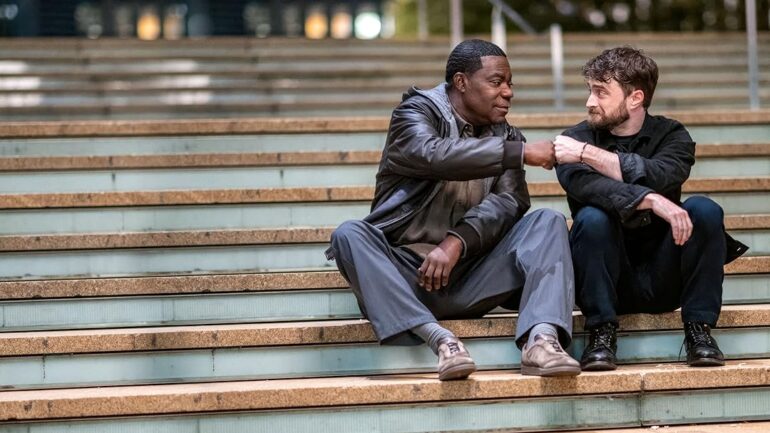
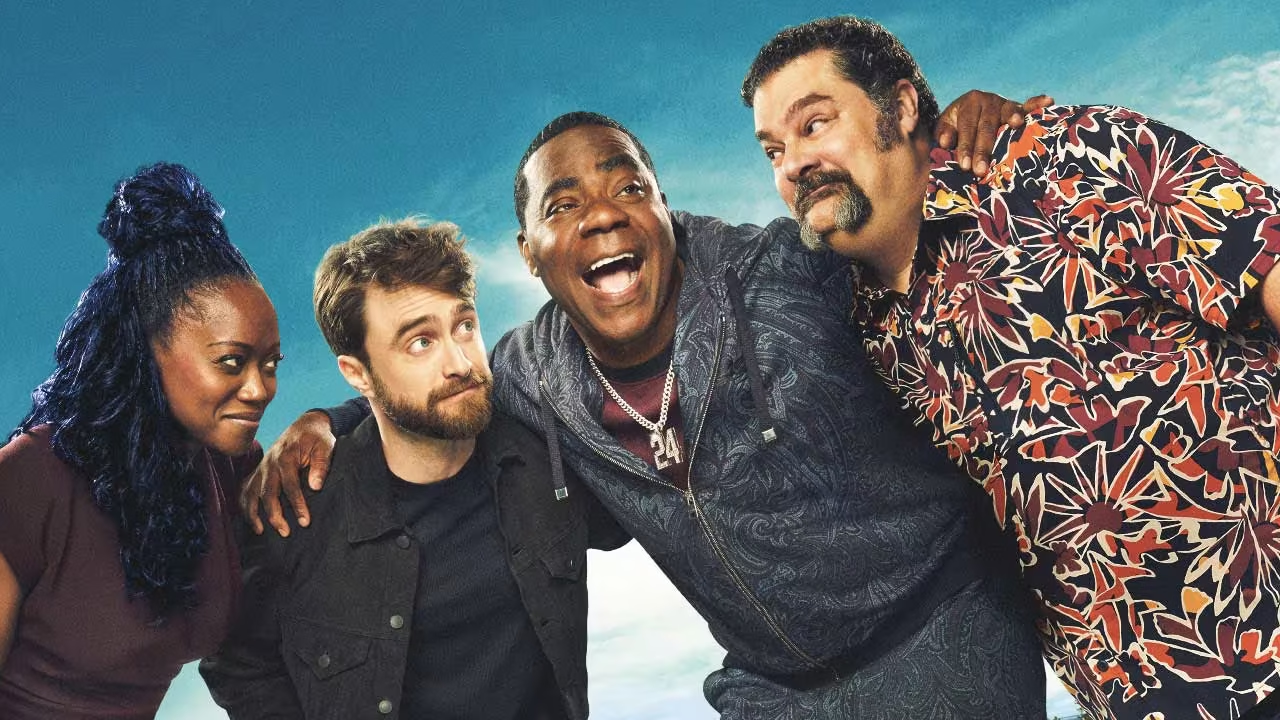
Actors of the “Fall and Rise”.
The Architect of the New Noise: The Fall and Rise of Reggie Dinkins
In the mid-2010s, Reggie Dinkins was the name spoken in hushed, reverent tones within the boardrooms of legacy media and the backrooms of Silicon Valley’s most ambitious incubators. He was the quintessential “ghost in the machine”—a strategist who prided himself on invisibility, a man whose brand was built on the quiet, surgical execution of cultural dominance. To know his name was to be “in the room.” Today, that invisibility has been discarded in favor of a loud, jarring, and often contentious public persona. The man who once curated the silence is now the primary source of the noise.
This transition from a behind-the-scenes kingmaker to a front-facing polemicist isn’t just a personal pivot; it is a microcosm of a broader seismic shift in how power operates in the digital age. Dinkins’ trajectory reflects a culture that no longer rewards the quiet architect, but instead demands a constant, visible performance of relevance. In the current attention economy, being respected is secondary to being seen, and Dinkins has mastered the art of the “pivot to volume.”
The Timeline of an Evolution
The early career of Reggie Dinkins was defined by a calculated restraint. Emerging as a consultant for major lifestyle brands and record labels, he became synonymous with “the pivot to digital” before the phrase became a cliché. His work was characterized by a minimalist aesthetic and a refusal to engage with the press. In a rare 2015 profile by Vogue, he was described as “the most influential person you’ve never heard of,” a title he reportedly wore with a sense of elite satisfaction. At the time, his power was derived from exclusivity and the curated scarcity of his insights.
However, the mid-period of his career—roughly between 2019 and 2022—began to show the first cracks in this facade of detached brilliance. As the landscape of social media shifted from chronological feeds to algorithmic chaos, the “quiet power” model began to lose its leverage. Dinkins began appearing on high-profile podcasts, not to discuss strategy, but to offer sweeping, often contradictory critiques of the very industries he helped build. He started to lean into the role of the “disruptor,” a move that signaled he was no longer content with influencing the narrative; he wanted to be the narrative.
The culmination of this shift arrived in the fall of 2024. During a series of live-streamed “manifestos” and high-profile public appearances, Dinkins abandoned the nuance of his earlier work for a series of highly publicized confrontations with former partners and industry gatekeepers. The strategist had become the firebrand, trading the boardroom for the digital pulpit.
The Friction of Rebranding
The reaction to this transformation has been polarized, reflecting the deep divides within the modern media ecosystem. To his new cadre of followers, Dinkins is a truth-teller, an insider finally pulling back the curtain on a “corrupt” and “stagnant” establishment. To his former peers, however, the shift is viewed with a mixture of pity and alarm. Variety recently reported on the “increasing isolation” of Dinkins within the upper echelons of the creative industries, noting that several long-term partnerships were severed following his more incendiary public statements.
The backlash hasn’t just been professional; it’s been aesthetic. Critics argue that by entering the fray of public discourse, Dinkins has destroyed the “myth of the genius” that once protected him. When you are invisible, people project greatness onto you; when you are on a three-hour podcast loop, your flaws become the headline. The media framing has shifted from “the man who sees the future” to “the man who can’t stop talking about it,” a subtle but devastating blow to his previous aura of intellectual authority.
The Motivation Behind the Mask
Dinkins himself has been surprisingly candid about this shift, though he frames it through the lens of liberation rather than desperation. In a recent interview with New York Magazine, he admitted, “The era of the ‘behind-the-scenes’ power player is dead. If you aren’t holding the microphone, someone else is going to use it to tell a lie about you. I realized that my silence wasn’t a sign of strength; it was a sign of obsolescence.”
This admission reveals the core motivation: the fear of being forgotten. In an era where “relevance” is the only currency that doesn’t devalue, the strategy of scarcity is increasingly risky. Dinkins’ pivot is a calculated attempt to exert control over his legacy in real-time. He isn’t just seeking attention; he is seeking a specific kind of un-ignorable presence. Whether it is through provocation or performative vulnerability, the goal is to remain a permanent fixture in the cultural feed.
The Scarcity of Authenticity
The “Fall and Rise” of Reggie Dinkins is more than a story about one man’s ego; it is a commentary on the modern media ecosystem’s demand for constant output. We have reached a point where cultural authority is no longer granted by years of consistent work, but by the ability to capture and hold a 24-hour news cycle. This creates a paradox: to stay relevant, one must often sacrifice the very qualities (restraint, depth, mystery) that made them relevant in the first place.

Dinkins’ transformation highlights the tension between relevance and legacy. A legacy is built over decades; relevance is maintained minute-by-minute. By choosing the latter, Dinkins has entered into a “Faustian bargain” with the algorithm. He has gained a massive, direct-to-consumer audience, but he has lost the ability to be taken seriously by the institutions that once sought his counsel.
Furthermore, this situation exposes the fragility of “authenticity” in the digital age. Is the “real” Reggie Dinkins the quiet architect of 2015 or the loud provocateur of 2025? Or is the “real” Dinkins simply the one who knows how to survive in whatever environment he finds himself in? In a culture that prioritizes performance over substance, the line between a genuine evolution and a strategic pivot becomes impossible to discern.
A New Kind of Ghost
As we look at the current cultural landscape, Reggie Dinkins stands as a harbinger of a new type of public figure: the “Hybrid Influencer-Executive.” This is someone who understands that in the 2020s, power is not just about what you own or what you build, but about how much of the “discourse” you can occupy.
However, there is a question of sustainability. The strategy of constant provocation requires an ever-increasing “dosage” to achieve the same effect. If the “Fall” of Reggie Dinkins was his descent from the heights of industry respect, his “Rise” is into a much more volatile atmosphere. He is now subject to the same whims of the public that he once claimed to manipulate from afar.
In the end, Dinkins has traded his seat at the table for a spot on the stage. He is no longer the man writing the script; he is the lead actor in a play of his own making, desperately hoping the audience doesn’t look for the exit. His story reminds us that in the modern world, the greatest luxury isn’t power or wealth—it’s the ability to be quiet and still be remembered. It is a luxury that Reggie Dinkins, for better or worse, has decided he can no longer afford.