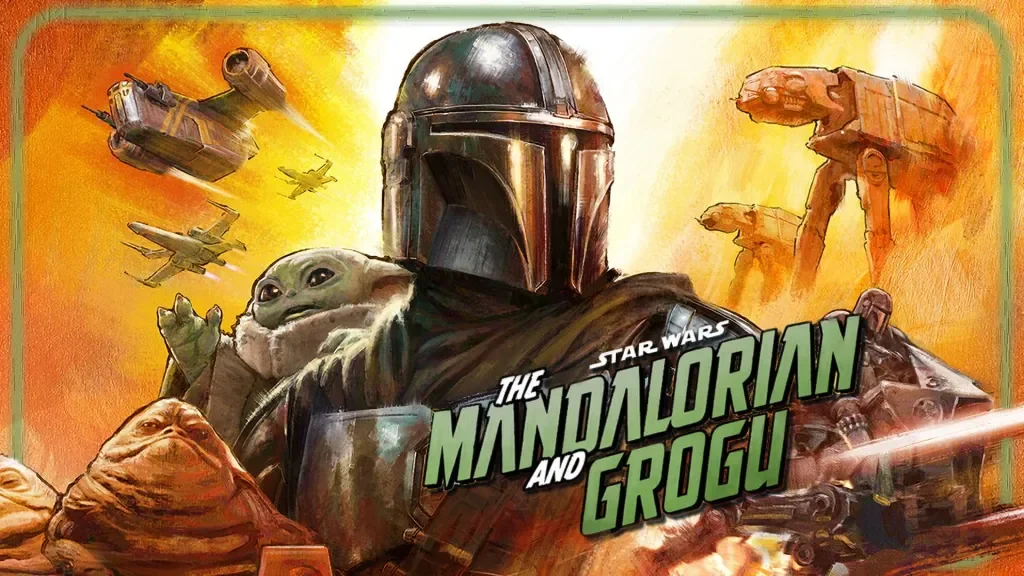
Streams on May 22, 2026.
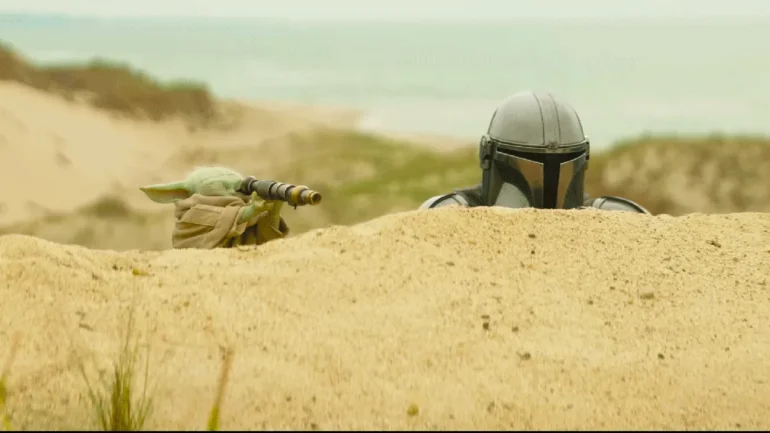
In the winter of 2019, Star Wars occupied a precarious dual reality. On the silver screen, the release of The Rise of Skywalker marked a lumbering, exhausted conclusion to a sequel trilogy that had fractured the fanbase and signaled a creative drought for the Skywalker Saga. Simultaneously, on a nascent streaming platform called Disney+, a quiet, grainy western titled The Mandalorian was doing the impossible: it was making Star Wars feel small, intimate, and vital again. With its sparse dialogue and tactile, “used-future” aesthetic, the series—and its breakout star, Grogu—suggested that the future of the galaxy lay in the serialized experimentation of television.
Fast forward to the present, and the trajectory has inverted. The announcement of The Mandalorian and Grogu, directed by Jon Favreau, represents a definitive pivot. It is no longer enough for Din Djarin to anchor the “Mando-verse” on the small screen; he is being conscripted to save the theatrical business model. This shift from streaming savior to cinematic life raft reveals a deeper tension within Lucasfilm: a retreat from the narrative risks of the unknown and a doubling down on the safety of established iconography. It is a transition that suggests Star Wars is less interested in expanding its borders than it is in fortifying its most profitable outposts.
The Way of the Warrior: A Timeline of Transformation
The reputation of The Mandalorian was forged in the fires of independence. When the series debuted, it was framed as a departure from the high-stakes melodrama of the Jedi and the Sith. Jon Favreau and Dave Filoni leaned into the tropes of Lone Wolf and Cub and the Man with No Name, creating a character who was defined by his anonymity. Din Djarin was a blue-collar bounty hunter, and the show’s success was built on the premise that Star Wars could survive—and thrive—without a lightsaber or a destiny.
However, by the second and third seasons, the narrative gravity of the broader franchise began to take hold. What started as a standalone odyssey increasingly became a hub for “backdoor pilots” and legacy cameos. The appearance of Luke Skywalker in the Season 2 finale was a masterclass in digital nostalgia, but it also signaled a shift: the show was no longer just about a man and his foundling; it was a delivery mechanism for the wider Lucasfilm IP roadmap.
The third season further complicated this identity. As the scale increased to encompass the reclamation of the planet Mandalore, the intimacy that defined the early episodes evaporated. Critics noted that the titular character often felt like a guest star in his own show, as the focus shifted toward Bo-Katan Kryze and the political machinations of the New Republic. The announcement of a feature film is the logical conclusion of this “bloat”—a realization that the story has become too large for the episodic format, yet perhaps too tethered to its own tropes to offer anything truly new.
The Gravity of the Multiplex
The reaction to the film’s announcement has been a mix of corporate optimism and fan fatigue. For Disney, the move is a strategic necessity. After a series of theatrical cancellations and delays—including projects from Patty Jenkins and Rian Johnson that seem to have vanished into development hell—The Mandalorian and Grogu offers the one thing the studio’s balance sheet craves: certainty.
Yet, within the industry, there is a sense that this represents a “break glass in case of emergency” maneuver. Industry analysts have pointed out that Lucasfilm is essentially cannibalizing its most successful streaming asset to fill a hole in its theatrical calendar. The backlash among circles of cultural critics centers on the “Marvel-ization” of the brand—the idea that every successful character must eventually be scaled up until the charm that made them successful is crushed by the weight of spectacle.
Peer reactions have been tellingly quiet. While Favreau has championed the move as a return to the “big screen experience,” the silence from other creators who were once promised their own corners of the galaxy speaks volumes. The message is clear: the experimental era of Star Wars is over; the era of the “Sure Thing” has begun.
The Strategy of the Helmet
The motivation behind this shift isn’t just about box office receipts; it’s about control. In various interviews, Jon Favreau has alluded to the unique challenges of telling a long-form story in a universe where every detail is scrutinized. By moving to film, Lucasfilm regains a level of “event-ized” control that streaming lacks. A movie is a singular statement; a TV show is a conversation that can go off the rails.
There is also the undeniable factor of Grogu’s marketability. From the moment he appeared, “Baby Yoda” became a global phenomenon, driving billions in merchandise sales. To move this character to the big screen is to acknowledge that he is no longer just a character, but a corporate mascot on par with Mickey Mouse. The film isn’t just a sequel to a TV show; it is a brand activation designed to ensure that the most recognizable silhouette in modern pop culture remains at the center of the cultural conversation.

The Legacy of the Loop
Zooming out, the transition of The Mandalorian to the cinema reveals a profound anxiety at the heart of modern media: the fear of the “New.” We are currently living in a culture of the “reboot-quel” and the “inter-quel,” where the primary goal of major IP is to minimize risk. By elevating a TV character to a film lead, Disney is attempting to bridge the gap between the prestige of the theater and the reliability of the algorithm.
This situation reflects a broader shift in how cultural authority is gained today. In the 1970s, Star Wars gained authority by being a radical, genre-defying explosion of imagination. In the 2020s, it maintains authority through ubiquity. The “Mando-verse” has become a closed loop—a self-referential ecosystem where the thrill of discovery is replaced by the comfort of recognition. It suggests that in the modern media landscape, “relevance” is often mistaken for “persistence.” If a character is everywhere, they must be important; if a story is told across every medium, it must be essential.
But there is a cost to this persistence. When a franchise becomes a “forever story,” it loses the ability to have a meaningful ending. The stakes of The Mandalorian were highest when we didn’t know if the titular hero would survive the week. Now that he is a cinematic pillar, his “plot armor” is as thick as his Beskar steel.
A Galaxy Frozen in Carbonite
As The Mandalorian and Grogu prepares for its theatrical debut, it carries the weight of a franchise that is still searching for its post-Skywalker identity. While the film will almost certainly be a financial success, its cultural legacy is less certain. By pulling its most successful television characters into the cinematic orbit, Lucasfilm is playing it safe, but safety is rarely the ingredient that produces lasting art.
We are left to wonder if the silver screen will expand the world of Din Djarin or simply expose its limitations. In a landscape increasingly crowded with cinematic universes and endless spin-offs, the most “rebellious” thing Star Wars could do is move forward into a future that doesn’t rely on the masks of the past. For now, however, the strategy is clear: hold onto the child, put on the helmet, and hope that nostalgia is enough to keep the engines running. The Mandalorian’s creed is “This is the Way,” but for a franchise seeking to regain its creative soul, one has to ask if it’s the only way left.