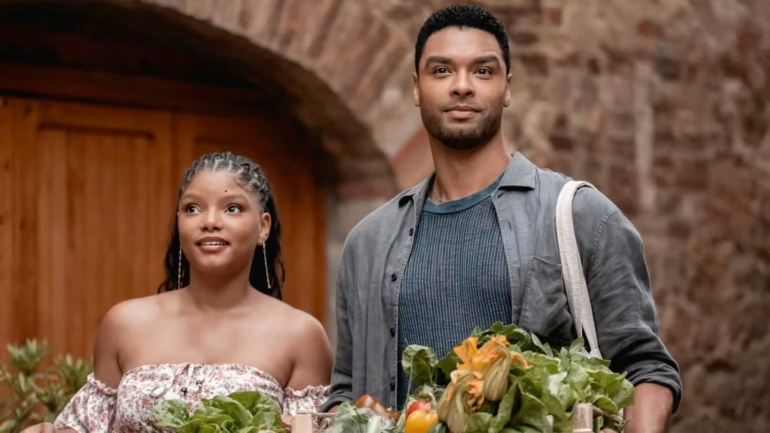
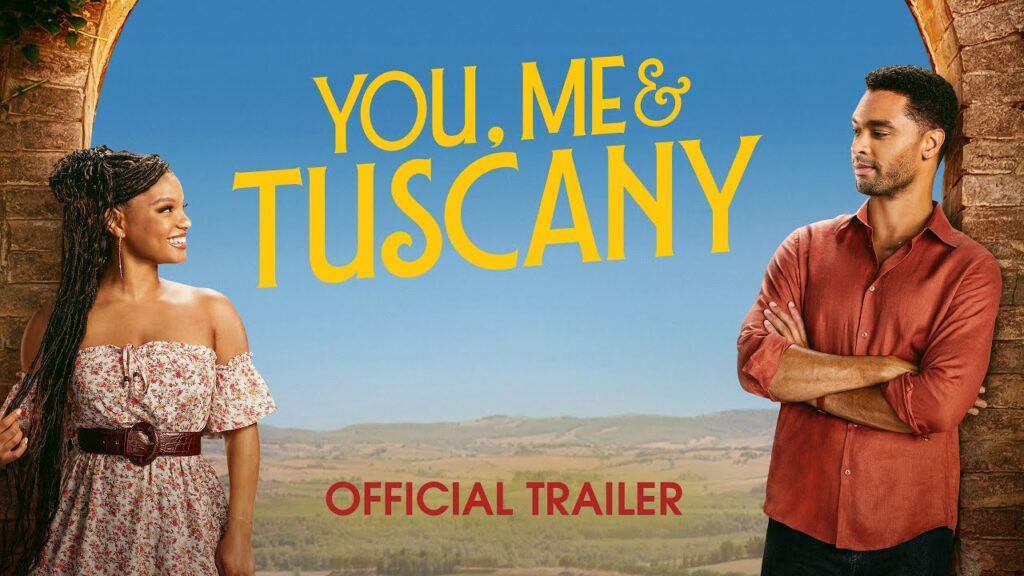
You, Me & Tuscany in theaters April 10, 2026.
For decades, the “Tuscany film” existed as a harmless, middle-brow subgenre—a visual vacation for audiences who wanted to see golden sunlight hit a terracotta roof while a protagonist discovered a dormant passion for pottery or slow-cured meats. It was a cinema of comfort, defined by the pastoral safety of Under the Tuscan Sun or the gentle romance of A Room with a View. However, the arrival of the 2026 production You, Me & Tuscany has shattered this porcelain peace. What was once a genre of escapism has transformed into a battlefield over cultural ownership, revealing a sharp tension between the global appetite for “authentic” European aesthetics and the local reality of a region being hollowed out by its own beauty.
This shift marks a fundamental change in how we view the intersection of geography and narrative. You, Me & Tuscany isn’t just a movie; it is a flashpoint for a broader cultural pattern where the “vibe” of a place is extracted for global consumption, often at the expense of its soul. In a world of digital nomadism and Instagram-ready travel, the film has become a mirror for our own conflicted motivations: we want the world to be a stage for our personal growth, yet we are increasingly resentful when the stage-hands start to speak back.
The Era of Extraction: A Timeline of the Tuscan Gaze
The reputation of Tuscany in the cultural imagination was built on the “Grand Tour” ideal—a place where the Anglo-American soul goes to be refined by history and wine. Early 20th-century literature and mid-century cinema established the region as a static, beautiful backdrop for the “enlightenment” of foreigners. This was the era of the “Background Aesthetic,” where Italy existed primarily to facilitate a Western protagonist’s emotional arc.
The mid-period shift occurred in the early 2010s. As digital photography and social media democratized the “Tuscan Dream,” the region began to experience the first tremors of ambiguity. Films like Letters to Juliet and the travelogue-inflected Eat Pray Love moved away from high-art refinement and toward a more transactional form of tourism. Italy was no longer just a place for growth; it was a product to be purchased. This period was characterized by a growing contradiction: the more the “authentic” Italian lifestyle was marketed, the more the actual infrastructure of that lifestyle—small farms, local artisans—became inaccessible to those who lived there.
The crystallization of the current narrative occurred in late 2025 and early 2026 with the production of You, Me & Tuscany. Unlike its predecessors, which focused on personal discovery, this film leaned heavily into the “lifestyle brand” model of filmmaking. Recent events, including protests from local agricultural unions regarding the film’s use of private lands and its sanitized depiction of rural labor, have stripped away the romantic veneer. The public perception has shifted from “delightful romance” to “cultural extraction,” as the film’s release coincided with a record-breaking year for overtourism in Florence and its surrounding valleys.
The Conflict of Consumption: Backlash and the “Vibe” Economy
The reaction to You, Me & Tuscany has been a case study in industry and audience pushback. While trade publications like Variety and The Hollywood Reporter initially hailed the film’s “stunning cinematography” and “cross-continental appeal,” the digital conversation told a different story. A significant segment of the audience, particularly younger viewers sensitive to themes of “gentrification” and “orientalism” in European contexts, began to meme the film’s more egregious clichés.
The conflict centered on the film’s framing of the “Italian local.” In You, Me & Tuscany, the residents are depicted as charming, eccentric background characters whose only function is to offer wisdom and pasta to the American leads. This industry response—the “Disney-fication” of real people—triggered a feud between the production’s marketing arm and Italian cultural critics. L’Espresso famously ran an editorial titled “The Tuscan Theme Park,” arguing that films like this were creating a “hologram” of the country that prioritized the tourist’s gaze over the citizen’s life. Media framing moved from reviewing the acting to debating the film’s “geopolitical impact” on local economies and rental markets.
The Strategy of the Surrogate: Admitting the Performance
The creators of You, Me & Tuscany have been surprisingly candid about their motivations, though perhaps not in the way they intended. In a press junket interview with Vogue, the lead actress implicitly acknowledged the “aspirational” strategy of the project, stating that the film was intended to be “the ultimate Pinterest board brought to life.” This wasn’t a slip of the tongue; it was a mission statement. The motivation was “Relevance through Relatability”—the idea that by creating a perfect, filtered version of reality, the film could occupy a permanent space in the consumer’s lifestyle.
This admission reveals a shift toward provocation-as-marketing. The producers knew that the “aesthetic” of the film would be its strongest selling point, regardless of the narrative’s depth. By leaning into the “Performance of Authenticity,” they were attempting to control the narrative of Tuscany itself. As one producer noted in a Business Insider feature on the “Netflix-ification of travel,” the goal is to create “destination IP”—a film that functions as a 90-minute advertisement for a specific type of high-end, curated experience.

Cultural Analysis: Legacy vs. the Algorithmic Gaze
The situation surrounding You, Me & Tuscany reveals a profound truth about our current cultural moment: the total victory of the “Algorithm” over “Legacy.” In the past, the cultural authority of a place like Tuscany was tied to its history, its art, and its physical permanence. Today, that authority is contested and redistributed through the lens of social media and transmedia storytelling. A film like this doesn’t care about the “Legacy” of the Renaissance; it cares about the “Relevance” of the sunset.
This leads to a crisis of authenticity. When we see a “Tuscan lifestyle” on screen that has been focus-grouped for a global audience, we are witnessing a performance that has decoupled itself from the reality of the location. Power, in the modern media ecosystem, is the ability to define a place for those who have never been there. The influence of the “Vibe Economy” means that the image of the place becomes more valuable than the place itself.
Furthermore, the controversy highlights how cultural authority is gained and lost today. In the mid-20th century, a filmmaker like Fellini or Pasolini held the authority to define the Italian identity. Now, that authority is held by the platform and the brand. When a film like You, Me & Tuscany dominates the global conversation, it effectively “overwrites” the local narrative, turning a living, breathing region into a static “asset” for a multinational corporation. This is the true conflict of the modern era: the struggle between the “Global Consumer” who demands an endless supply of beautiful, easy-to-digest content, and the “Local Resident” who is becoming a stranger in their own home.
Conclusion: The Sunset on the Stage
As we sit situated within today’s cultural landscape, You, Me & Tuscany serves as a reflective takeaway for how we engage with the world through media. The film’s strategy of “Aesthetic Extraction” has certainly carried weight at the box office, but its long-term positioning is increasingly fragile. As the public becomes more aware of the “behind-the-scenes” costs of these cinematic vacations—from the rise in local rent to the hollowing out of community identities—the “Pinterest-board” approach to storytelling begins to feel not just shallow, but exploitative.
The question remains: does this identity still carry weight in a changing environment? As we move toward a culture that increasingly values “transparency” and “ethical consumption,” the “Golden Hour” cinema of the past may find itself in the shade. The ultimate irony of You, Me & Tuscany is that in its attempt to capture the “magic” of a place, it may have accelerated its disappearance. In the end, we have to ask ourselves: when we look at the rolling hills of Tuscany on a screen, are we looking at a place, or are we just looking at a mirror of our own desire to escape the world we’ve built for ourselves? The answer, like the film itself, is beautiful to look at, but increasingly difficult to live with.