Betting on yourself is one of the most overused, delusional phrases in basketball when you don’t have all the facts.
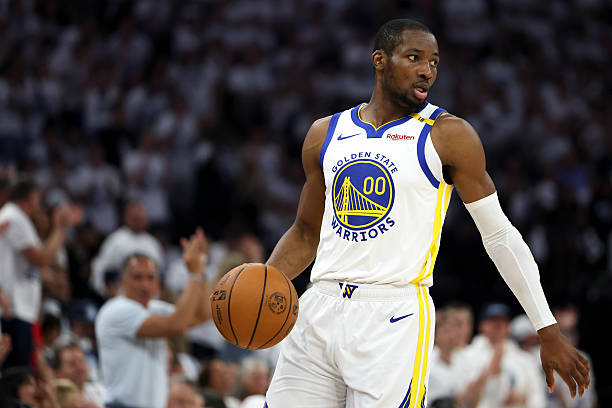
Leave $30 million a year on the table, watch every single alternative evaporate, and end up taking a fraction of that figure just two years later. The Jonathan Kuminga situation is officially the latest entry in a long line of cautionary tales about turning down secure money, overestimating your market, and failing to read the room.
The Baseline: Turning Down $30 Million a Year
Go back to 2024. The Golden State Warriors had a $30 million-a-year contract extension penciled in for Kuminga. The offer wasn’t made because he was a proven, dominant superstar carrying the franchise night in and night out. It was based on raw upside, elite athleticism, and the draft slot he held.
At the same time, Kuminga looked around the league and saw his 2021 draft peers—guys like Jalen Green and Alperen Şengün—getting massive extensions. He decided he wanted maximum money (in the $44 million range) and turned down the $30 million per year, believing he could play his way into a max contract.
There was nothing else on the table. The Warriors gave him a top-tier valuation, and he passed on it.
The Reality Check: History Always Repeats
When a player bets on himself without the production, the leverage, or the statistical backing to justify it, the result is almost always predictable.
- Nerlens Noel turned down $70 million from Dallas and never saw that kind of money again.
- Dennis Schröder turned down $84 million from the Lakers, hit the market, and ended up on a short $5.9 million deal.
- Victor Oladipo turned down massive offers in Indiana and Houston before injuries and market shifts completely reset his valuation.
Kuminga did not have the stats or the tape to command a $44 million max contract. He didn’t lock down a focal-point role, nor did he put up numbers that forced teams to back up the brink’s truck. Yet, he still bet on himself.
The Present: $6.5 Million in Minnesota
Fast forward to two years after turning down $30 million per year. Kuminga just signed a two-year, $13 million contract ($6.5M per year) with the Minnesota Timberwolves that includes a player option.

When the market dried up, he had to take $6.5 million a year.
Turning down a potential $12 million-a-year framework from the Los Angeles Lakers to take $6.5 million in Minnesota was actually the right basketball move given the circumstances. The Lakers’ situation was complex, required sign-and-trade mechanics that held up his market, and offered a role where he likely would have been buried. In Minnesota, the fit makes sense. He steps into a frontline system next to a different caliber of player where he can actually get starter-level minutes and play to his strengths.
Reading the Room
Taking $6.5 million in Minnesota to reset his market on a better fit is a fine short-term recovery, but the broader picture remains unchanged: he left tens of millions of dollars on the table for no clear reason.
You cannot “bet on yourself” when you have nothing to leverage beyond where you were drafted and what your peers are making. When the team holding your rights offers $30 million a year on potentialand nobody else in the league is matching that energy it’s time to read the room, sign the paper, and build from there.
Instead, Kuminga became the latest entry in the Nerlens Noel category. He had life-changing money on the table, walked away, and learned the hardest lesson in professional negotiations: confidence without leverage is just a gamble you lose.