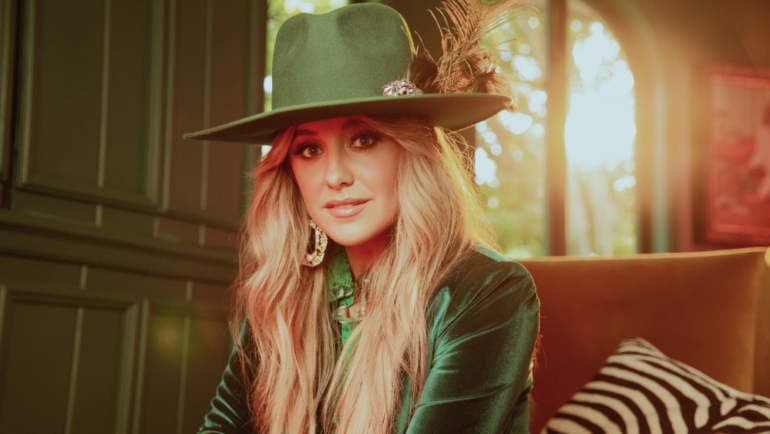
Lainey Wilson 2026 on tour soon.
There was a time, not so long ago, when the name Lainey Wilson was synonymous with a specific kind of scrappy, dirt-road defiance. She was the girl from Baskin, Louisiana, who lived in a bumper-pull camper trailer for three years, a songwriter whose “bell-bottom country” aesthetic felt less like a costume and more like a thumb in the eye of Nashville’s then-stagnant “Bro-Country” era. She represented the return of the singer-songwriter who smelled like woodsmoke and grit—a refreshing pivot back to the Dolly Parton school of authenticity, where the hair was big but the stories were bigger.
Fast forward to the announcement of her 2026 global tour, and the silhouette has changed. The bell-bottoms are still there, but they are now part of a multi-million-dollar machine that spans Hollywood television, massive corporate sponsorships, and a relentless presence on the awards circuit. Wilson hasn’t just entered the mainstream; she has become its primary architect. However, as the venues scale from intimate honky-tonks to international arenas, a tension has begun to emerge. The artist who once framed herself as the ultimate outsider is now the ultimate incumbent, raising a critical question about the shelf life of “authenticity” once it becomes a globally exported brand.
The Camper and the Crown
The Wilson timeline is a masterclass in the slow-burn ascent. Her early years in Nashville, documented in various profiles by Rolling Stone, were defined by a rigorous adherence to the “outlaw” narrative. She wasn’t just another hopeful; she was a throwback to the 1970s aesthetic of Jessi Colter and Loretta Lynn. Her 2021 breakout, “Things a Man Oughta Know,” served as the perfect mission statement—a song about traditional values and domestic resilience that resonated with a demographic feeling alienated by the pop-inflection of modern country.
The shift began in 2022. It wasn’t a musical pivot so much as a cultural one. Her casting as “Abby” on Taylor Sheridan’s Yellowstone didn’t just introduce her music to a wider audience; it tethered her identity to a specific brand of hyper-masculine, neo-Western Americana. Suddenly, Wilson wasn’t just a singer; she was a symbol of the “Yellowstone effect”—a movement that commodified the rural experience for a suburban audience.
By the time she swept the 2023 CMA Awards, winning Entertainer of the Year, the transformation was complete. The “bell-bottom country” moniker, once a niche subgenre, had become a corporate slogan. The grit was being polished into a shine, and the industry was watching to see if the foundation could hold the weight of such rapid, massive expansion.
The Friction of Success
Success in Nashville is often met with a peculiar kind of scrutiny. Unlike the pop world, where evolution is expected, country music demands a static sort of “realness.” As Wilson’s profile grew, so did the whispers of overexposure. The conflict isn’t found in a single scandal—Wilson remains remarkably scandal-free—but in the cumulative effect of her ubiquity.
Industry peers and critics began to note the shift from Wilson as a musician to Wilson as a “lifestyle brand.” When she announced her expansive partnership with Coors Light, it signaled a move toward the kind of corporate saturation that often dilutes an artist’s “man of the people” credibility. Public reaction has split: while her core fanbase remains fiercely loyal, a growing segment of the country audience has begun to push back against the “manufactured” feel of her meteoric rise. On social media platforms and music forums, the conversation has shifted from her vocal prowess to the perceived “theatrics” of her stage presence—a critique often leveled at women in country who dare to occupy as much space as their male counterparts.
The media framing, too, has evolved. Outlets like The New York Times have moved from profiling her as a “rising star” to analyzing her as a “power player.” This shift in language strips away the underdog narrative that served as her primary engine for a decade. When you are the one holding the trophies, you can no longer claim to be fighting the system.
The Performance of the “Real”
Wilson is not unaware of this transition. In interviews following the release of her album Whirlwind, she has been candid about the dizzying pace of her life. Speaking to Vogue, she admitted that the pressure to maintain her identity while becoming a global entity is a constant struggle. “It’s about making sure that the girl who lived in that camper is still steering the ship,” she remarked, a sentiment that acknowledges the performative nature of her current position.
This admission is crucial. It suggests that Wilson understands the “authentic country girl” is now a role she must actively maintain. In the modern media ecosystem, authenticity is rarely organic; it is a curated set of signifiers. For Wilson, those signifiers—the hat, the flares, the Southern drawl—must now work harder than ever to overcome the reality of her status as a global superstar. The more she insists on her “ordinariness,” the more the audience is reminded of just how extraordinary (and wealthy) she has become.
The Modern Credibility Crisis
The “Lainey Wilson Phenomenon” reveals a broader cultural pattern: the collapse of the “Outlaw” as a viable long-term identity in the digital age. In the 1970s, Willie Nelson could remain an outsider for decades because the infrastructure of fame was slower and less invasive. Today, the moment an outsider finds success, they are immediately absorbed into the machinery of content creation.
We are currently obsessed with the idea of “relevance versus legacy.” In the race to remain relevant—to stay in the TikTok algorithms, to secure the Super Bowl commercials, to land the prestige TV cameos—artists often sacrifice the very mystery that built their legacy. Wilson’s 2026 tour represents the apex of this tension. It is a victory lap, yes, but it is also a test of whether a brand built on “small-town” values can survive the cold, hard lights of an international arena.
Furthermore, Wilson’s trajectory highlights how cultural authority is contested today. In the past, the “gatekeepers” were radio DJs and label heads. Now, authority is granted by a mix of “algorithmic friendliness” and “brand alignment.” Wilson is the perfect artist for this moment because she is infinitely “taggable.” She fits into the “Coastal Cowgirl” aesthetic, the “Strong Woman” narrative, and the “Traditionalist” box all at once. But when an artist becomes everything to everyone, they run the risk of becoming nothing to themselves.
Conclusion: The Road Ahead
As Lainey Wilson prepares for her most ambitious year yet, she stands at a crossroads that every genre-defining artist eventually reaches. The “Whirlwind” is no longer just an album title; it is the permanent state of her career.
Her strategy—leaning into the “lifestyle” aspect of her fame while doubling down on her “working-class” roots—is a high-wire act. If she succeeds, she will become the definitive country star of the 2020s, a bridge between the genre’s storied past and its commercial, multi-platform future. If the art begins to feel secondary to the brand, however, she may find that the “bell-bottom” identity is a difficult one to outrun once the fashion trends inevitably shift.
For now, Wilson remains the most potent symbol of country music’s current identity crisis: a genre that desperately wants to stay “authentic” while being more profitable and polished than ever before. Whether Wilson can keep her boots on the ground while her head is in the stratosphere will determine if she is a lasting icon or simply the most successful product of a very specific, and very fleeting, cultural moment.