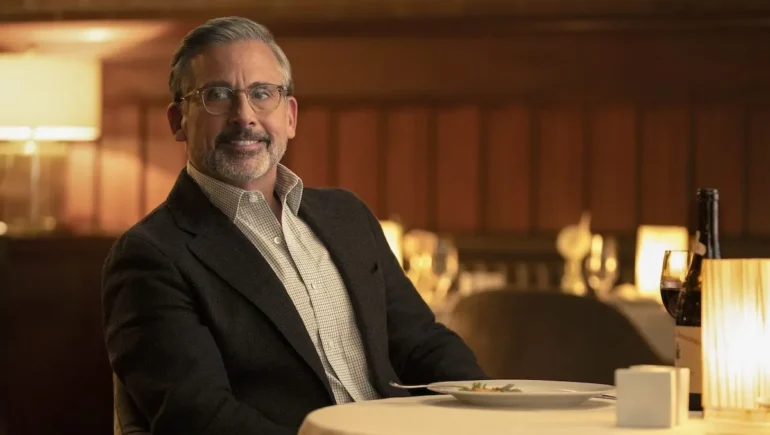
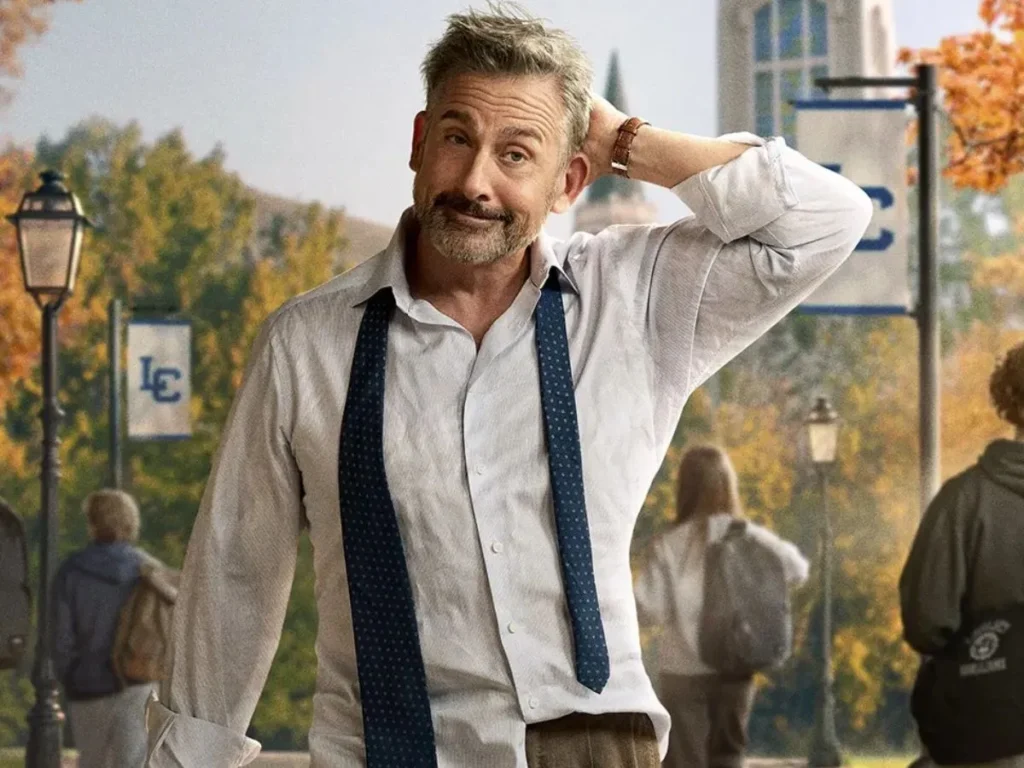
“Rooster”, season 1 now streaming with season 2 up next.
There was a time, not so long ago, when the “prestige television” archetype was a monolith of brooding silence and calculated violence. We knew the mold: the middle-aged man, the crumbling marriage, the secret life of crime, and the heavy, cinematic lighting of a mid-Atlantic suburb. But when the first season of Rooster arrived, it didn’t just break the mold; it pecked it to pieces.
The sharpest contrast lies in the show’s central DNA. In its earliest conception, Rooster was marketed as a gritty, hyper-realistic exploration of rural power dynamics—a successor to the grim-faced realism of Winter’s Bone or Ozark. Yet, as the first season unfolded, it revealed itself to be something far more chaotic, colorful, and intentionally provocative. It swapped the traditional “slow burn” for a “controlled burn,” trading the quiet dignity of the traditional rural drama for a loud, performative, and deeply cynical look at how modern power is maintained through spectacle. This shift from somber realism to high-octane cultural provocation marks the series not just as a piece of entertainment, but as a mirror to our own transition from an information economy to an attention economy.
The Hatching: A Timeline of Transformation
The trajectory of Rooster began with a quiet rumble in the trades. When Netflix first announced the project, it was positioned as a neo-Western thriller focused on the cyclical nature of poverty and corruption in the American South. The early symbolism was stark: muted palettes, shots of rusted farm equipment, and a heavy emphasis on the “salt of the earth” authenticity of its lead characters.
However, by the mid-point of the first season, a palpable shift occurred. The ambiguity of the protagonist’s moral compass began to tilt away from “troubled hero” and toward “viral villain.” We saw the introduction of narrative devices that leaned heavily into meta-commentary, with characters consciously performing for audiences within the show’s own universe. The cinematography shifted from the naturalistic style of Variety-approved dramas to a more frenetic, saturated aesthetic reminiscent of high-end music videos.
The recent conclusion of the first season crystallized this narrative. The finale didn’t end with a traditional shootout or a moral reckoning; it ended with a calculated media leak within the story, a digital “crowing” that signaled the protagonist’s total embrace of notoriety over integrity. The public perception followed suit. What started as a show for the “prestige drama” crowd ended as a lightning rod for TikTok edits and discourse about the “glamorization of the grifter.”
The Pecking Order: Conflict and Reaction
The transformation of Rooster did not happen in a vacuum. The industry response was immediate and divided. Critics at The New York Times initially praised the show’s “unflinching look at rural decay,” but as the season progressed into more flamboyant territory, some felt the show had traded its soul for “cheap, algorithmic thrills.”
The backlash wasn’t just limited to critics. There was a notable friction between the show’s creators and the traditional “gatekeepers” of television. Peers within the industry—creators of more traditional dramas—expressed a sense of unease with Rooster’s pace. It felt, to some, like a betrayal of the medium’s recent history. Yet, this pushback only fueled its relevance. The media framing shifted from “is this good art?” to “is this what we are now?”
Peer reactions became part of the show’s own legend. When prominent actors from competing streamers reportedly turned down roles due to the “chaotic” nature of the script, the Rooster team leaned into it, framing the production as an outsider movement. This “us vs. them” narrative, carefully documented in Billboard and Complex, helped build a protective shell around the show, where criticism was rebranded as “not getting the vibe.”
The Strategist’s Admission: Performance as Power
The most revealing aspect of Rooster’s rise is the implicit and explicit acknowledgment by its creators and cast that the show is a calculated exercise in provocation. In a recent profile for Vogue, the show’s lead actor admitted that the character’s evolution was designed to “weaponize the audience’s desire for a villain.” They noted that in a saturated market, “being understood is less important than being seen.”
Direct quotes from the show’s writing room suggest a deep awareness of the “attention-seeking” nature of the plot. One producer told VICE that the goal was to create a “spectacle that couldn’t be ignored,” admitting that the shift toward more controversial plot points was a deliberate strategy to maintain dominance in the Nielsen streaming charts. This isn’t just art for art’s sake; it’s art as a survival tactic in the streaming wars. It reflects a fear of irrelevance that haunts every modern creator, leading to a “louder is better” philosophy that prioritizes the “moment” over the “monument.”
Cultural Analysis: The Age of the Crow
Zooming out, the Rooster phenomenon reveals a fundamental truth about our current cultural moment: authority is no longer granted; it is seized through the sheer volume of attention. We have moved past the era of the “anti-hero” (the Tony Sopranos and Don Drapers who felt guilt for their sins) and into the era of the “performative hero.”

This reflects a broader shift in how we perceive authenticity. In the past, authenticity was found in the private moments of a character—what they did when no one was watching. In Rooster, and in our wider culture, authenticity has been redefined as “honesty about one’s own performativity.” The characters are “real” because they admit they are playing a game.
This mirrors the modern media ecosystem where influencers and politicians alike find power not in their policies or their craft, but in their ability to stay at the center of the conversation. Legacy is being traded for relevance. We are witnessing the death of the “slow burn” because we no longer have the patience for it. Cultural authority is now contested on the grounds of who can generate the most noise, and Rooster is the loudest bird in the yard. It questions the very idea of power: is it something you build over a lifetime, or is it something you take in fifteen-second bursts?
Conclusion: Will the Crowing Last?
As we look toward the potential for a second season, the question remains: does this strategy have legs? Rooster Season 1 was a masterclass in capturing the zeitgeist by refusing to play by its rules. It used the language of prestige TV to sell a story about the death of prestige.
However, the problem with a strategy based on provocation is that it requires an ever-increasing dose of shock to maintain the same effect. Once the audience becomes accustomed to the “crow,” it just becomes background noise. In a changing environment where audiences are beginning to show signs of “outrage fatigue,” the show’s reliance on spectacle might eventually become its downfall.
Rooster has successfully situated itself as the definitive show for an era defined by the fight for eyeballs. It is a cynical, brilliant, and exhausting reflection of ourselves. But as the sun sets on the first season, we have to wonder if, after all the noise and all the feathers, there is any substance left underneath, or if we are just watching a bird shout at its own reflection in a dark window. The cultural weight of the show currently hangs in the balance, waiting to see if it can evolve into a legacy—or if it will remain just another viral moment in an endless feed.