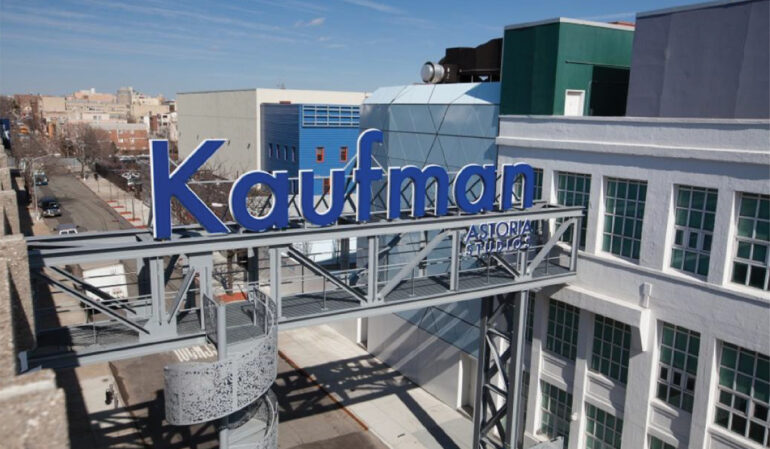
For decades, Kaufman Astoria Studios in Queens has stood as a monument to New York’s storied filmmaking legacy, a place where iconic scenes were etched into cinematic history. Its sprawling stages have hosted everything from the Marx Brothers’ anarchic brilliance in Duck Soup to the dramatic intensity of The Wolf of Wall Street, embodying a tangible link to a golden age of Hollywood that once thrived on the East Coast. Yet, this bastion of cinematic heritage now faces a starkly different reality: foreclosure. This precipitous situation for a studio deeply intertwined with American cultural production is not merely a local real estate story; it’s a potent symbol of the seismic shifts reshaping the entertainment industry, a narrative of legacy grappling with the brutal economics of relevance in a hyper-competitive, rapidly evolving media landscape.
The history of Kaufman Astoria Studios is, in many ways, a microcosm of Hollywood’s own dramatic arc. Established in 1920, it quickly became a powerhouse, a vital hub for Paramount Pictures and later for a diverse array of productions. Early statements and the studio’s very existence positioned it as a cornerstone of American filmmaking, a place where dreams were manufactured and cultural touchstones were born. Its early years were marked by ambitious productions and a palpable sense of industry dominance. As the decades progressed, however, the landscape began to transform. The rise of Hollywood in Los Angeles, coupled with changing distribution models and technological advancements, presented ongoing challenges. While the studio adapted, hosting productions that ranged from Sesame Street to major motion pictures like Men in Black 3, a subtle tension emerged between its storied past and the need for constant reinvention. The mid-period saw periods of uncertainty and fluctuating fortunes, a testament to the inherent volatility of the entertainment business. Recent events, however, have brought this struggle into sharp focus. Reports of significant financial distress, culminating in the looming threat of foreclosure, have cast a long shadow over its venerable halls, suggesting that even institutions with deep cultural roots are not immune to the pressures of the modern economy.
The news of the studio’s financial predicament has elicited a spectrum of reactions, highlighting the anxieties and realities of the current industry climate. For many who cherish New York’s cinematic history, the potential loss of Kaufman Astoria Studios represents a devastating blow, a symbolic severing of ties to a cherished past. Industry insiders, accustomed to the cyclical nature of production and the precariousness of independent studios, have expressed concern, noting the increasing difficulty for physical production spaces to remain solvent amidst rising costs and competition from streaming giants offering lucrative production deals. There’s a palpable sense of unease, a worry that such iconic locations might become relics of a bygone era, unable to compete with newer, more technologically advanced facilities or the allure of tax incentives found elsewhere. The media framing has often centered on the economic hardship, sometimes bordering on a moral panic about the decline of traditional Hollywood infrastructure, yet failing to fully capture the deeper cultural currents at play.
While direct admissions of motivation from entities facing foreclosure are rare, the situation implicitly points to a struggle for survival driven by a confluence of factors. The need for continuous capital investment to keep facilities state-of-the-art, the escalating costs of doing business, and the shifting demands of content creators—who are increasingly seeking integrated production and post-production services, often through consolidated media conglomerates—all contribute to a challenging environment. The studio’s trajectory reflects a broader pattern within the creative industries where maintaining relevance requires more than just a rich history; it demands constant adaptation and financial resilience. This isn’t about a simple failure to produce good content; it’s about the economic infrastructure that supports it straining under the weight of industry-wide transformations. The implicit acknowledgment lies in the very act of struggling to stay afloat in a market that prizes immediate financial returns and scalable operations over historical significance alone.

The Kaufman Astoria Studios saga is a stark illustration of the complex interplay between legacy and relevance in today’s cultural landscape. It raises profound questions about authenticity versus performance in an industry increasingly driven by curated narratives and digital presentation. Is a studio’s historical significance enough to guarantee its future, or must it constantly perform a version of itself that appeals to contemporary market demands? The battle for survival underscores the enduring power of attention and influence in the modern media ecosystem, where visibility and financial backing often dictate which cultural institutions endure. Gaining, losing, or contesting cultural authority today is less about the quality of the art produced and more about the economic and strategic maneuvering required to maintain a presence in a crowded marketplace. This situation speaks volumes about how cultural capital, once seemingly immutable, is now subject to the same market forces that govern any other commodity.
Ultimately, the potential foreclosure of Kaufman Astoria Studios serves as a potent parable for our times. It forces us to confront the uncomfortable truth that even institutions deeply embedded in our cultural memory are not immune to the relentless march of economic change. The question that looms large is whether this venerable studio, a symbol of a filmmaking era, can adapt to survive, or if its rich history will be relegated to the archives, a poignant reminder of a past that could not keep pace with the future. In an era where cultural relevance is a constantly shifting target, the fate of places like Kaufman Astoria Studios will undoubtedly continue to be a bellwether for the health and direction of the creative industries themselves.