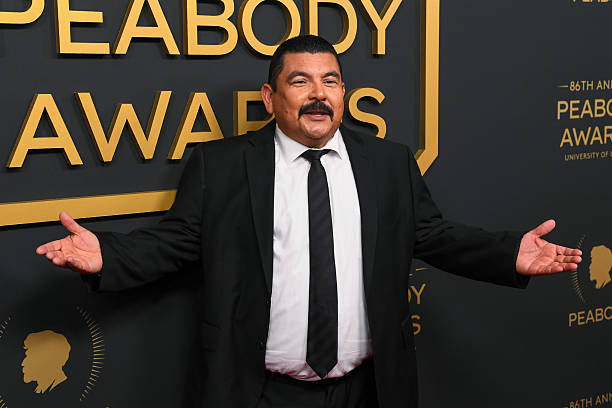
For years, Guillermo Rodriguez was the reliably eccentric, often silent, but always memorable presence at Jimmy Kimmel’s side. A fixture of late-night television, his role was largely defined by his physical comedy, his limited English, and his unflappable demeanor as the butt of jokes or the purveyor of absurd interviews. Now, Rodriguez is stepping out of the shadows of the talk show desk and onto the brightly lit dance floor of ‘Dancing With The Stars’ Season 35. This transition from a beloved, albeit niche, late-night sidekick to a competing celebrity contestant represents more than just a career pivot; it signals a fascinating shift in how recognition is cultivated and maintained in our hyper-mediated cultural landscape.
Rodriguez’s journey to the ballroom is a testament to a career built on consistent, almost elemental, presence. He first appeared on *Jimmy Kimmel Live!* in 2003, initially as a security guard, before gradually evolving into the show’s unofficial mascot and comedic foil. His segments, often involving him attempting to speak English with a thick accent or engaging in bizarre physical stunts, became a hallmark of the show, endearing him to a global audience. Early on, his appeal was rooted in an almost anthropological curiosity—a glimpse into a persona that was both genuine and performative, an outsider navigating the polished world of American entertainment. His limited English was not a barrier but a feature, creating a unique comedic rhythm that required no complex dialogue, just a well-timed look or a physical reaction. This established a clear, almost static, public identity for Rodriguez: the lovable, slightly bewildered, non-English speaking sidekick.
The seeds of ambiguity began to sprout subtly. As his role on *Jimmy Kimmel Live!* solidified, Rodriguez started appearing in other contexts, often still tethered to Kimmel, but hinting at a broader potential. He made cameos in films and had small roles in television shows, always playing variations of himself. However, the significant mid-period shift arguably occurred as social media platforms amplified his presence beyond the confines of the nightly broadcast. Clips of his segments, often taken out of context, went viral, showcasing his unique brand of humor to a wider demographic. This increased visibility, coupled with his consistent appearances on a national platform, created a persona that transcended the initial novelty. The question began to arise: was Guillermo simply a character, or was he a nascent celebrity in his own right, capable of carrying his own narrative?
The formal announcement of his casting on ‘Dancing With The Stars’ crystallizes this narrative. It’s a move that leverages his existing, albeit specific, fame and attempts to translate it into a new arena. This isn’t an actor taking on a new role or a musician exploring a different genre; it’s a personality, known primarily for being *near* the spotlight, stepping directly into it. The reaction from fans has been largely enthusiastic, a testament to his enduring appeal. However, within the broader cultural discourse, the casting raises questions about the value placed on established fame versus emergent celebrity, and the long-term viability of a persona built on a single, albeit effective, comedic premise. Is this a strategic move to broaden his appeal, or a sign of the evolving nature of celebrity, where consistent, recognizable figures are increasingly sought after for reality programming, regardless of their traditional industry credentials?
Rodriguez himself has, in his characteristic understated way, acknowledged the strategic nature of his career. While he rarely engages in deep introspection publicly, his consistent presence and willingness to participate in a wide array of comedic bits suggest an understanding of the need for visibility and adaptation. In past interviews, he has expressed gratitude for the opportunities given to him by Kimmel, often framing his contributions with humility. However, the decision to join a show like ‘Dancing With The Stars’ speaks volumes. It’s a calculated step towards mainstream celebrity, a move that requires not just performing but competing, exposing himself to a level of scrutiny far beyond his late-night appearances. The motivation is likely multifaceted—personal growth, a desire for broader recognition, and perhaps a strategic play to extend his relevance in an industry that constantly demands reinvention.

This casting illuminates a significant current in our cultural moment: the blurring lines between niche appeal and mainstream celebrity, and the increasing emphasis on sustained, recognizable presence over traditional talent metrics. In an era saturated with content, where attention is the ultimate currency, figures like Rodriguez, who have cultivated a consistent and recognizable persona over years, possess an inherent advantage. ‘Dancing With The Stars,’ a show that has consistently tapped into this phenomenon by casting reality stars, athletes, and internet personalities alongside actors and musicians, represents the apex of this trend. It’s a platform that values relatability and entertainment value above all else. Rodriguez’s inclusion suggests a cultural shift where authenticity, or at least perceived authenticity, and a well-established public identity can be more valuable than a specific skill set. It questions the traditional hierarchies of fame, suggesting that the power of consistent, accessible personality can be a potent force in the modern media ecosystem, capable of bridging the gap between a late-night sidekick and a potential ballroom champion.
Ultimately, Guillermo Rodriguez’s foray into ‘Dancing With The Stars’ is more than just a quirky casting choice; it’s a symptom of a cultural landscape that increasingly rewards enduring, recognizable personalities. Whether this strategic leap will translate into sustained stardom or prove to be a fleeting moment in the spotlight remains to be seen. In an environment where relevance is a constant battle, and legacy is often overshadowed by the immediate pursuit of attention, Rodriguez’s journey from the wings of late-night to the center stage of reality television offers a compelling case study in the evolving dynamics of fame and the enduring power of a familiar face in a world hungry for connection, however performative.