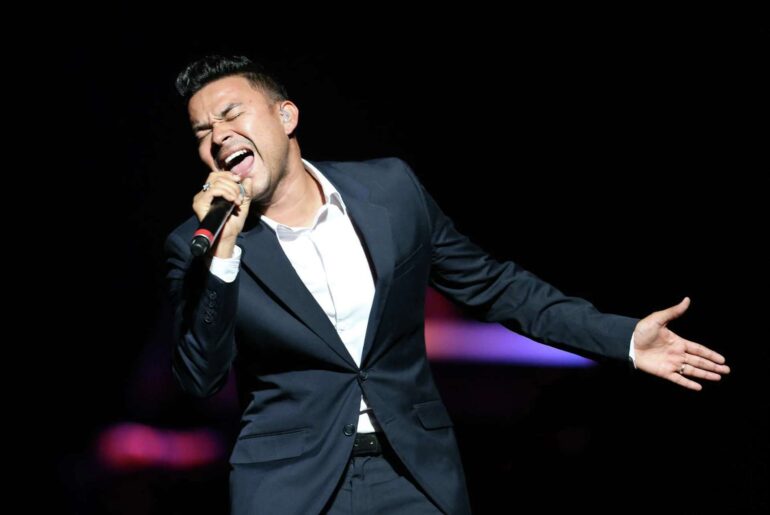
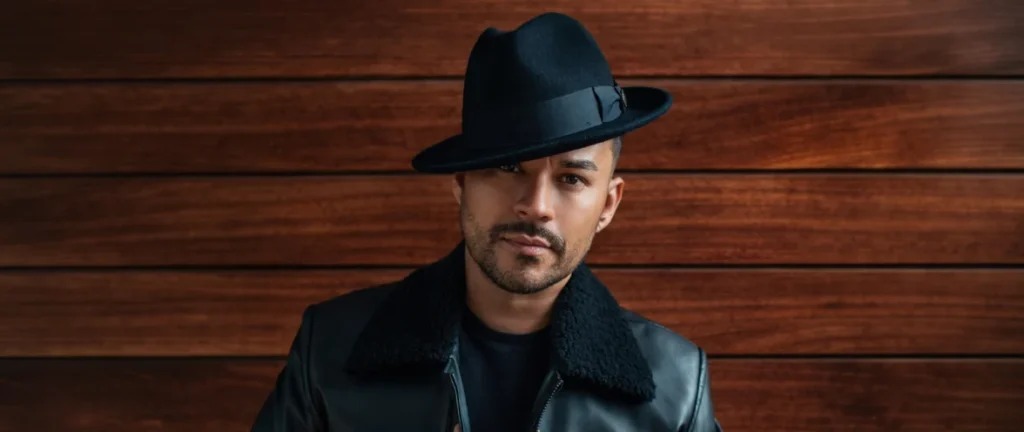
Frankie J has announced 2026 tour dates!
In 2003, Frankie J was the undisputed voice of a specific, sun-drenched intersection of culture. As the frontman for Kumbia Kings and later as a solo powerhouse, his brand was built on a precise kind of vulnerability—a high-tenor sincerity that felt as home on a freestyle track as it did on a Billboard-charting R&B ballad. He was the “clean-cut” alternative to the rugged aesthetic of early 2000s hip-hop, a bridge between the traditional Spanish-language crooner and the American pop star.
Fast forward to 2026, and the landscape has shifted beneath the feet of the traditional R&B archetype. We are no longer in an era defined by the monoculture of TRL or the gatekeeping of terrestrial radio. Yet, as Frankie J prepares for his latest string of tour dates, he isn’t leaning into the desperate reinvention or the “edgy” pivot that claims so many veterans of the “Bling Era.” Instead, we are witnessing a quiet, strategic doubling down on the very thing that made him a fixture: the unwavering commitment to the “smooth.” This evolution—from a teenager in a boy band to a legacy act navigating the digital-first economy—reveals a broader cultural truth about how we consume nostalgia and the shifting value of “authenticity” in a post-genre world.
The Timeline of a Tenor
The journey began not in the recording booth, but in the vibrant, cross-pollinated streets of San Diego and Mexico. Performing under the name “Frankie Boy,” his early work was rooted in the freestyle movement—a genre that demanded high energy and unabashed sentimentality. This era defined his reputation as a localized star, but it was his recruitment into A.B. Quintanilla’s Kumbia Kings that provided the platform for a global identity. In the late 90s, Frankie J was the secret weapon of a group that fused Cumbia with urban pop, positioning him as a symbol of the bilingual “New American” experience.
By 2003, the shift toward a solo R&B identity was complete. His debut solo album, What’s a Man to Do, and the massive success of “Don’t Wanna Try” established him as a cornerstone of “Chicano R&B.” He wasn’t just a singer; he was a representative of a demographic that the mainstream industry often overlooked but which held massive purchasing power. The mid-period of his career, however, was marked by the inevitable friction of a changing industry. As the 2010s saw the rise of trap and the decentralization of R&B, Frankie J’s output became more experimental, oscillating between EDM collaborations and traditional Mariachi-inflected projects. There was a moment of ambiguity: was he a pop star trying to keep up, or a heritage artist returning to his roots?
The answer has crystallized in the 2020s. Recent appearances on high-profile nostalgia tours and a consistent presence on the festival circuit—most notably those catering to the “Love Jam” and “Old School” demographics—have solidified his current narrative. He has moved past the need to compete with the avant-garde R&B of SZA or Brent Faiyaz. Instead, Frankie J has embraced his role as a guardian of a specific melodic tradition, a move that has only increased his credibility among a multi-generational audience.
The Friction of the Legacy Act
This shift hasn’t occurred without its share of industry pushback and audience debate. In the mid-2010s, as the “Latin Explosion 2.0” took hold with the global dominance of Reggaeton and Latin Trap, artists like Frankie J were often framed by media outlets as relics of a “softer” era. The backlash wasn’t directed at the music itself, but at the perceived lack of “edge” in a landscape that increasingly prioritized grit over polish.
However, a counter-narrative has emerged in the last few years. As the culture experiences a massive “Y2K” revival, the industry’s response to Frankie J has transitioned from polite dismissal to active reclamation. His peers, including Baby Bash and members of the wider Chicano rap community, have consistently championed him as a pioneer who laid the groundwork for the current fluidity between Spanish and English in pop music. Today, the “controversy” isn’t about whether he is relevant, but about how the mainstream failed to recognize the staying power of the lane he carved out decades ago.
The Strategy of Staying
Frankie J has been remarkably candid about the mechanics of his longevity. In several interviews, he has acknowledged that his career is no longer about chasing a number-one single, but about maintaining a direct, unmediated relationship with a loyal base. “It’s about the connection,” he has noted, implicitly admitting that the goal is no longer market domination, but market retention.
This is a strategic choice. By focusing on the “touring economy” rather than the “streaming arms race,” he exerts a level of control over his legacy that many of his contemporaries lost when they signed restrictive, trend-chasing deals in the late aughts. His 2026 schedule is a testament to this provocation through persistence. He is banking on the idea that in an era of hyper-fast content cycles, the most radical thing an artist can do is remain consistent.
Beyond the Ballad: A Cultural Analysis
Zooming out, the “Frankie J phenomenon” reveals a profound shift in how we define cultural authority. For a long time, an artist’s value was determined by their ability to innovate—to constantly break new ground. But in the current media ecosystem, authority is increasingly gained through endurance.
We are living in a moment where “Authenticity vs. Performance” is the primary tension of the digital age. In a world of curated TikTok personas and AI-generated hooks, an artist like Frankie J represents a “pre-algorithmic” authenticity. His voice—untouched by the heavy pitch-correction of the modern era—acts as a sonic tether to a time that felt more tactile and less manufactured.
Furthermore, his career highlights the contested nature of the “Latin Artist” label. For decades, the industry tried to box him into specific categories, but his refusal to abandon either his R&B sensibilities or his cultural heritage has allowed him to outlast the very trends that once threatened to overshadow him. He reflects a broader cultural pattern where the “niche” has become the new “mainstream.” By catering specifically to the Latino community that grew up with him, he has built a fortress that is immune to the whims of the wider pop charts.
The Weight of the Smooth
As Frankie J takes the stage in 2026, the question is no longer whether his music “fits” the current sound. The question is whether the culture still values the craftsmanship of the crooner. In an environment that often rewards the loud, the shocking, and the immediate, the smooth tenor of a 2000s icon might seem like a quiet rebellion.
His current strategy suggests that identity, when rooted in genuine skill and cultural specificity, carries more weight than any viral moment. He remains a fixture not because he changed, but because he understood exactly who he was before the world told him who he should be. In the end, Frankie J’s persistence is a reminder that while trends are temporary, the emotional resonance of a well-sung melody is a permanent currency. Whether he is playing to a sold-out arena or an intimate theater, the architect of the smooth is still standing, proving that legacy isn’t something you leave behind—it’s something you carry with you.