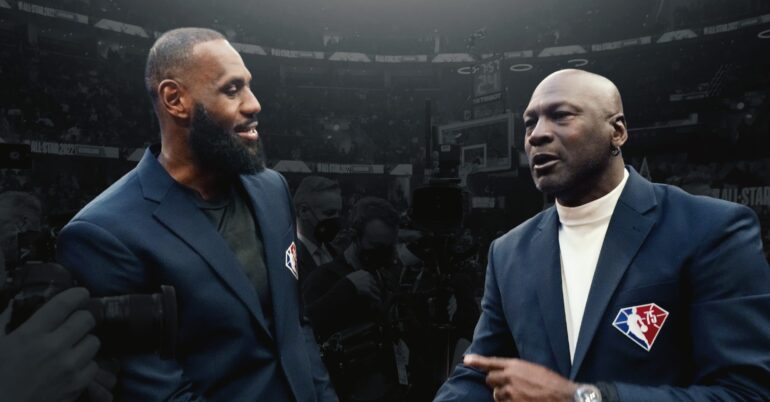
LeBron James, the seemingly ever-present titan of modern basketball, has long existed in a unique cultural space. For years, his career has been a meticulously curated narrative, a quest not just for championships, but for a place in history. Yet, woven into the very fabric of this grand ambition has been the persistent, almost spectral, presence of Michael Jordan. In the summer of 2016, fresh off his historic NBA championship with the Cleveland Cavaliers, James articulated this omnipresent influence with striking candor, confessing to Sports Illustrated, “My motivation is this ghost I’m chasing. The ghost played in Chicago.” This admission, made at the zenith of his powers, underscored a decade-long, and still ongoing, cultural obsession: the unceasing debate over James’ place in the pantheon of basketball greats, specifically in relation to Jordan, the man widely considered the sport’s ultimate icon.
The narrative of LeBron James’ ascent has always been inextricably linked to Michael Jordan. From the moment James entered the league in 2003, the comparisons were immediate and unavoidable. He was hailed as