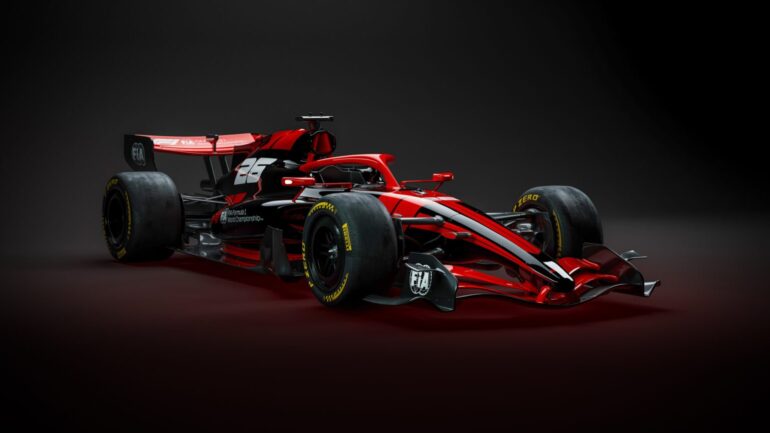
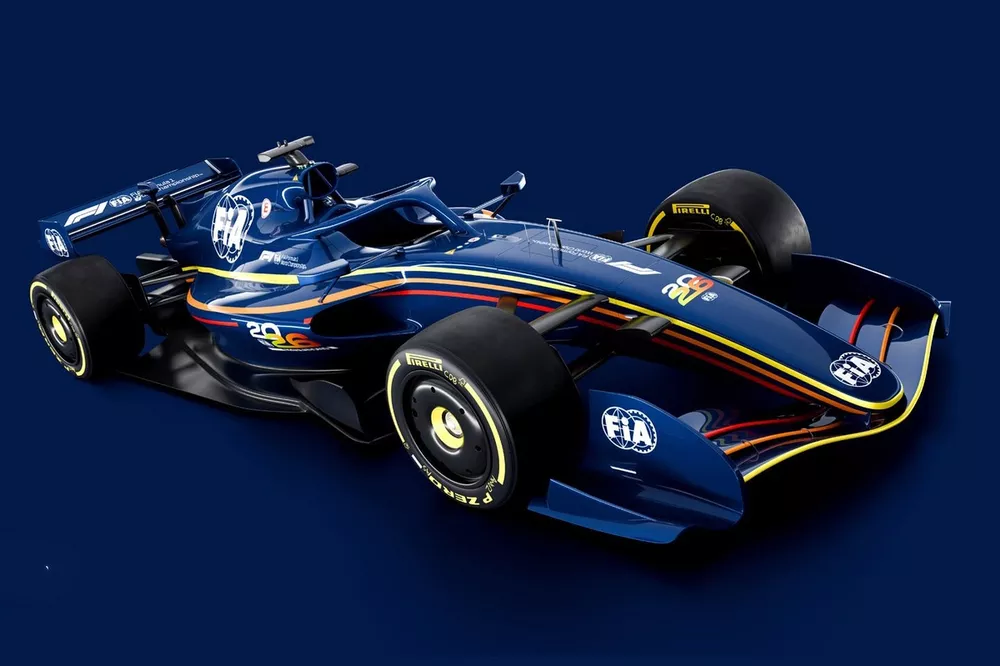
The FIA officially unveils the 2026 Formula 1 regulations and car concept, emphasizing a “nimble” design and increased electrification. Photo: FIA / Formula 1.
There was a time when the identity of Formula 1 was etched in the visceral, unapologetic excess of the internal combustion engine. It was a sport defined by the high-pitched scream of V10s and the “win at any cost” philosophy of engineering giants. The car was a singular pursuit of aerodynamic perfection, indifferent to the world outside the circuit walls. Fast forward to the present, and the sport finds itself at a crossroads defined not by raw speed, but by the “nimble” mandate of the 2026 regulations.
This shift represents a sharp contrast to the sport’s historical DNA. For decades, F1 was the apex of automotive indulgence; now, it is positioning itself as the vanguard of sustainable engineering and corporate responsibility. The 2026 car is designed to be lighter, smaller, and powered by a 50/50 split between internal combustion and electric power. This isn’t just a technical tweak; it is a fundamental rebrand. The contradiction lies in the tension between the sport’s legacy as a high-octane spectacle and its new ambition to be a green-tech laboratory. The transformation reflects a broader cultural pattern: the desperate need for legacy industries to justify their existence in a climate-conscious, ESG-driven world.
The Trajectory of Transformation
The journey to 2026 began long before the recent FIA announcement. In the early 2010s, F1 was still reeling from the global financial crisis, yet it maintained a stubborn adherence to the V8 engine era. The reputation was one of technical brilliance but environmental tone-deafness. The first major pivot occurred in 2014 with the introduction of the Hybrid Power Unit, a move that was initially met with derision from purists—including Sebastian Vettel—who famously lamented the loss of the sport’s “noise.”
Throughout the mid-2010s, F1 occupied a space of ambiguity. It struggled to balance the demands of manufacturers like Mercedes and Renault, who wanted road-relevance, with a fan base that craved the gladiatorial theater of the past. The “Hybrid Era” was technically successful but culturally stagnant until the Netflix-fueled explosion of Drive to Survive. This changed the game. F1 was no longer just a race; it was a content machine.
By the time the 2022 ground-effect regulations arrived, the sport’s popularity was at an all-time high, particularly in the United States. However, this popularity brought increased scrutiny. The recent crystallization of the 2026 narrative—focusing on 100% sustainable fuels and “active aerodynamics”—is the final move in a decade-long chess game. F1 is no longer trying to be the fastest sport on earth; it is trying to be the most “efficient” high-performance ecosystem on earth.
The Conflict of the “Nimble” Mandate
The reaction to the 2026 blueprint has been far from unanimous. While industry leaders and new entrants like Audi have praised the regulations as a necessary evolution for manufacturer involvement, the internal pushback has been vocal. Critics argue that the reliance on battery power will create a “Frankenstein” car—one that is lighter on paper but potentially slower in a straight line due to energy management constraints.
World Champion Max Verstappen has been one of the most prominent detractors, warning that the sport risks becoming a “competition of engines” rather than a competition of drivers. The media framing has similarly split: outlets like The New York Times focus on the sport’s commercial expansion and green credentials, while technical publications like Motorsport.com question whether the “nimble” concept is actually achievable given the weight of the required electrical components. This isn’t just a technical feud; it’s a battle for the soul of the sport. Is F1 a sport, or is it a demonstration of corporate sustainability?
The Strategy of Survival
The motivations behind this shift are not hidden. F1 leadership has been remarkably candid about the need for these changes to ensure the sport’s long-term viability. FIA President Mohammed Ben Sulayem has stated that the goal is to create a car that is “fit for the future,” acknowledging that without these changes, the sport risks losing the very manufacturers that fund it.
In a rare moment of corporate vulnerability, F1 CEO Stefano Domenicali has implicitly admitted that the sport’s relevance is tied to its ability to mirror global trends. Speaking to Billboard and other outlets regarding the sport’s expansion, the underlying message is clear: attention is the primary currency. The 2026 regulations are a defensive maneuver against obsolescence. By mandating sustainable fuels and smaller cars, F1 is attempting to shield itself from the “dinosaur” label, proving it can be both a spectacle and a solution. It is a calculated provocation—challenging engineers to solve the climate puzzle while keeping the circus on the road.
Cultural Analysis: The Performance of Authenticity
The 2026 pivot reveals a profound truth about the modern media ecosystem: authenticity is now a performance of alignment. In the past, F1’s “authenticity” came from its raw, unfiltered power. Today, cultural authority is gained through carbon neutrality and technological mindfulness.
This situation highlights the tension between relevance and legacy. F1 is a legacy brand attempting to “de-age” itself for a Gen Z audience that values ethics as much as entertainment. This is the same pattern seen in the fashion industry’s pivot to “circularity” or the tech industry’s pivot to “ethical AI.” It is a move from the “Great Man” theory of history—the lone driver conquering the machine—to a collective narrative of systemic optimization.
Furthermore, the 2026 regulations underscore how power and influence are contested today. The “influence” no longer resides solely with the fastest driver; it resides with the entity that controls the narrative of progress. By positioning itself as a pioneer of sustainable fuels, F1 is attempting to capture the “moral high ground” in a way that makes it indispensable to global partners. It is a transition from being a sport that people watch to a platform that people use to signal their values.
Conclusion: The Weight of the Future
As we approach the 2026 season, the question remains: will the “nimble” car actually carry weight in a changing cultural landscape? F1 is betting that the world still wants the glamour and speed of racing, provided it comes with a clean conscience. However, there is a risk that in trying to be everything to everyone—a green lab, a high-fashion event, and a peak-performance sport—it may lose the very edge that made it a global phenomenon.
The 2026 regulations are a mirror of our current cultural moment: a time of frantic adaptation, where the pressure to evolve is constant and the fear of being “left behind” drives every decision. F1 is no longer just racing against the clock; it is racing against a shifting definition of what it means to be relevant. Whether this new identity holds firm or collapses under the weight of its own contradictions will determine if Formula 1 remains the pinnacle of motorsport or becomes a beautifully engineered relic of a bygone era.