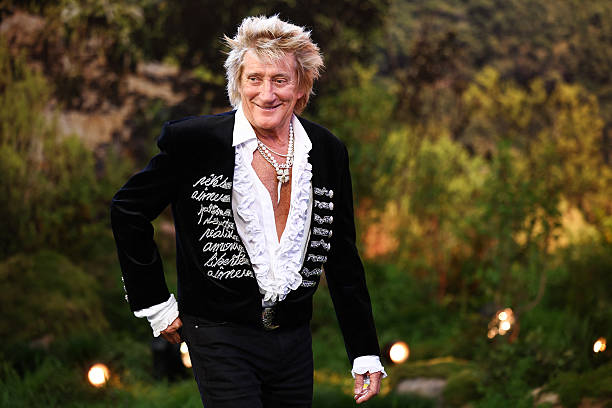
The image is stark, almost jarring: Rod Stewart, the perennial rock and roll showman, a man whose very essence has been synonymous with swagger and relentless energy, leaning on a piano, gasping for air mid-performance. This recent scene at Utah First Credit Union Amphitheatre, captured by concertgoers and widely shared, marks a poignant, if uncomfortable, juxtaposition against the vibrant, indefatigable persona Stewart has cultivated over a career spanning more than six decades. It’s a moment that transcends a simple report of an aging artist’s physical struggle; it’s a potent symbol of the complex interplay between legacy, performance, and the relentless pursuit of relevance in an era where every breath, every faltering step, is scrutinized and amplified.
Stewart’s career has been a masterclass in reinvention and enduring appeal. From his early days as the soulful vocalist for the Jeff Beck Group and later the Faces, where his raspy voice and flamboyant stage presence became legendary, to his global superstardom as a solo artist with hits like “Maggie May,” “Da Ya Think I’m Sexy?” and “Tonight’s the Night (Gonna Be Alright),” Stewart has consistently defied categorization. He navigated the shifting sands of popular music, from folk-rock to disco, always maintaining a core of recognizable swagger and a talent for crafting anthemic, singalong hits. His public image was one of an untamed spirit, a rock and roll lifer who seemed to possess an inexhaustible supply of stamina, both on and off stage. Even as he entered his seventies, Stewart continued to tour extensively, his live shows a testament to his enduring connection with a devoted fanbase. However, a string of canceled and postponed dates leading up to the Utah performance hinted at underlying challenges, setting a more somber prelude to what unfolded.
The visual of Stewart needing oxygen mid-performance, while met with understandable concern from fans, also underscores a broader cultural narrative about aging performers and the pressures they face. The immediate reaction online was a mixture of sympathy and a less charitable commentary on mortality and the inevitable decline of physical prowess. For an artist who built so much of his brand on an image of untamed vitality, such moments can feel like a public unraveling. Industry peers, while often offering quiet support, are acutely aware of the precarious balance artists must strike between pushing their limits and acknowledging their physical realities. The media, ever eager for a compelling narrative, frames such events through the lens of either inspiring resilience or the poignant decline of a legend, often blurring the lines between empathetic reporting and the salacious details of aging. This particular incident, amplified by social media, quickly became a talking point, feeding into a cycle of discussion about the artist’s current capacity and the nature of live performance in later life.
Stewart himself has, at times, spoken about the demands of touring and the physical toll it takes, though rarely in direct relation to moments of physical vulnerability during a show. In interviews over the years, he has often attributed his continued touring to a genuine love for performing and connecting with his audience, a sentiment that rings true for many artists who find their purpose and identity deeply intertwined with their craft. While he has not issued a specific statement directly addressing the oxygen incident, his commitment to finishing the show, as reported, speaks to a performer’s ingrained discipline and perhaps a refusal to be defined by physical limitations. This dedication, while admirable, also raises questions about the pressures to maintain a certain standard of performance, even when facing significant physical challenges. The unspoken contract between an artist and their audience often involves a promise of a certain spectacle, a promise that can be difficult to reconcile with the realities of aging.

This moment with Rod Stewart, viewed through a wider cultural lens, speaks volumes about our contemporary obsession with relevance and legacy. In an era dominated by the ephemeral nature of digital content and the constant demand for newness, established artists face a unique challenge. Do they lean into their legacy, becoming custodians of their past glories, or do they strive to remain active, risking the dilution of their image by confronting the realities of aging? The dichotomy between authenticity and performance is starker than ever. Audiences crave genuine connection, yet they also expect the polished spectacle that defined an artist’s prime. The modern media ecosystem, with its insatiable appetite for content, often rewards provocation and drama, making it difficult for artists to navigate the complexities of their later careers with nuance. The power to command attention, once solely the domain of undeniable talent and charisma, is now also influenced by the ability to generate buzz, whether through groundbreaking new work or, as in Stewart’s case, through moments that highlight the human condition in the face of enduring fame.
Ultimately, Rod Stewart’s recent performance in Utah is more than just a snapshot of an 81-year-old rock star needing a moment of respite. It’s a potent reminder of the enduring human struggle against time and the complex ways we, as a culture, engage with the aging of our icons. Does the image of Stewart leaning on a piano, while striving to finish his set, diminish his legacy? Or does it, in a strange way, enhance it by revealing the sheer grit and dedication required to keep performing at an age when many would have long since retired? In a landscape saturated with fleeting trends and manufactured personas, the authenticity of such a moment, however challenging, might hold a different kind of power. The question remains whether this more vulnerable portrayal, a departure from the unyielding rock god image, will ultimately resonate with a public increasingly drawn to narratives of resilience and the raw, unvarnished truth of human experience, or if it signifies a fading echo in the grand amphitheater of popular culture.