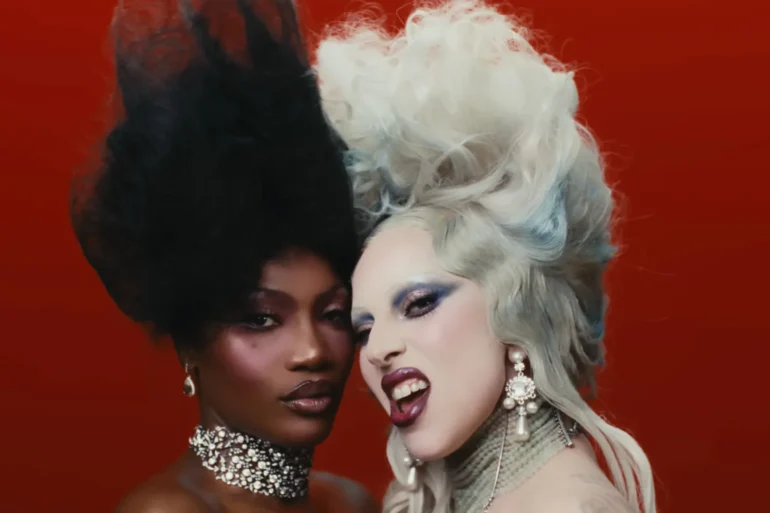
Lady Gaga, a chameleon of pop who once declared, “I’m not here to be pretty; I’m here to be admired,” has long built her empire on audacious reinvention. Her latest visual offering, the music video for ‘Runway’ featuring Doechii, plunges audiences into a high-fashion, avant-garde dreamscape. Yet, beneath the glittering surface of couture and choreographed fluidity, the collaboration invites a deeper examination of what authenticity means in the hyper-curated world of modern celebrity and queer representation in mainstream music.
Gaga’s career has been a masterclass in controlling her narrative through dramatic visual and sonic shifts. From the raw, art-school edginess of her debut, The Fame, where she embraced a persona of struggling artist-cum-fashion icon, to the more introspective explorations of Joanne and the disco-infused optimism of Chromatica, her evolution has always been meticulously crafted. Her early statements and the symbolic use of prosthetics, avant-garde costumes, and a deliberate embrace of the grotesque in videos like “Judas” and “Born This Way” cemented her status as an iconoclast, a voice for the marginalized, particularly the LGBTQ+ community, who saw in her a fearless champion of self-expression. This era was defined by a perceived raw, unfiltered artistry, a stark contrast to the more polished pop stars of the time.
The trajectory, however, has not been linear. While Gaga has consistently pushed boundaries, the mid-period of her career saw moments where the performance of authenticity began to feel more like a calculated strategy. The transition to acting in A Star Is Born, while critically acclaimed, also marked a pivot toward a more grounded, relatable persona, a move some critics interpreted as a deliberate attempt to broaden her appeal and shed some of the more extreme elements of her earlier image. This was met with a mixed reception from some long-time fans who felt she was sacrificing her unique edge for mainstream acceptance, a recurring tension in the careers of artists who straddle the line between art and commerce.
The “Runway” video arrives at a moment when Gaga, now a seasoned icon, has become a celebrated figure within the very establishment she once challenged. Her collaboration with Doechii, a rising star celebrated for her uninhibited sexuality and genre-bending artistry, could be seen as a passing of the torch, or perhaps a strategic alliance. Doechii, who burst onto the scene with the unapologetically queer and sexually explicit “So High” and “Crazy,” represents a newer generation of artists who are less concerned with subtlety and more direct in their presentation of identity. The “Runway” video, with its opulent visuals and a palpable sense of performative luxury, places both artists in a context that, while visually stunning, feels more aspirational than revolutionary. It’s a celebration of queer aesthetics within a high-fashion, almost aspirational framework, which, while undeniably impactful, raises questions about its accessibility and its departure from the more rebellious spirit that characterized Gaga’s early work.
Public reaction to such shifts is often polarized. While many fans embrace Gaga’s continued artistic exploration and her support for emerging artists like Doechii, some might question whether the “Runway” video’s slick production and overt embrace of luxury fashion represent a departure from the more accessible, DIY ethos that defined her early “Little Monsters.” The internet, a cacophony of immediate opinions, often frames these evolutions through lenses of “selling out” versus “maturing.” For Doechii, aligning with a global superstar like Gaga offers undeniable exposure, a crucial step in navigating the highly competitive music industry. However, the very visibility that propels an artist can also invite scrutiny, with fans and critics alike dissecting every move for perceived authenticity. The media’s framing of such collaborations often emphasizes the spectacle, sometimes overshadowing nuanced discussions about artistic intent and cultural impact.
Artists rarely admit to purely strategic motivations, but their actions often speak volumes. Gaga, throughout her career, has spoken about the importance of performance as a shield and a tool for self-discovery. In a 2011 interview with Vanity Fair, she stated, “I’ve always been told I was a freak… I’m going to be me. I’m going to be a freak. And I’m going to be beautiful, and I’m going to be powerful.” This statement encapsulates a core philosophy: using outward expression to reclaim power. “Runway” can be interpreted through this lens—a demonstration of control and mastery over her image, amplified by her alliance with Doechii. The video’s opulent setting and confident execution suggest a deliberate choice to inhabit a space of established power and influence, perhaps reflecting a desire to define queer visibility on her own terms, on a grander, more luxurious scale than before.

This moment, epitomized by “Runway,” speaks volumes about the current cultural landscape. The dichotomy of **relevance versus legacy** is increasingly blurred. Gaga, having secured her legacy, now seems focused on maintaining relevance through timely collaborations and evolutions that resonate with contemporary aesthetics and emerging artists. The line between **authenticity and performance** has become more porous than ever. In an era of social media, where curated online personas are the norm, the very definition of “realness” is constantly being renegotiated. Is authenticity about raw vulnerability, or is it about owning and mastering one’s performance? For artists like Gaga and Doechii, who operate at the intersection of art, fashion, and music, performance is not just a part of their craft; it is their craft. The intense competition for **power, attention, and influence** in the modern media ecosystem necessitates constant innovation and adaptation. Artists must continually find new ways to capture and hold audience attention, often by leaning into spectacle and leveraging strategic partnerships. Gaining cultural authority today often involves navigating these complex dynamics, balancing artistic integrity with the demands of a ravenous, always-on digital culture.
Ultimately, Lady Gaga and Doechii’s “Runway” is more than just a music video; it’s a cultural artifact reflecting the complex realities of stardom in the 21st century. It showcases a continued exploration of queer identity and high art within the pop music sphere, albeit through a lens of elevated luxury. As Gaga continues to navigate her multifaceted career, the question remains whether her current strategies of opulent display and high-profile collaborations will continue to resonate as profoundly as her earlier, more rebellious acts. In a world saturated with content and perpetually seeking the next big thing, the weight of an artist’s chosen narrative, and the cultural power it commands, is always subject to the tides of a rapidly changing landscape.